Description
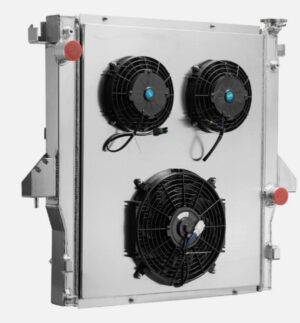
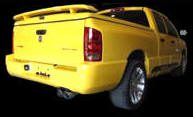
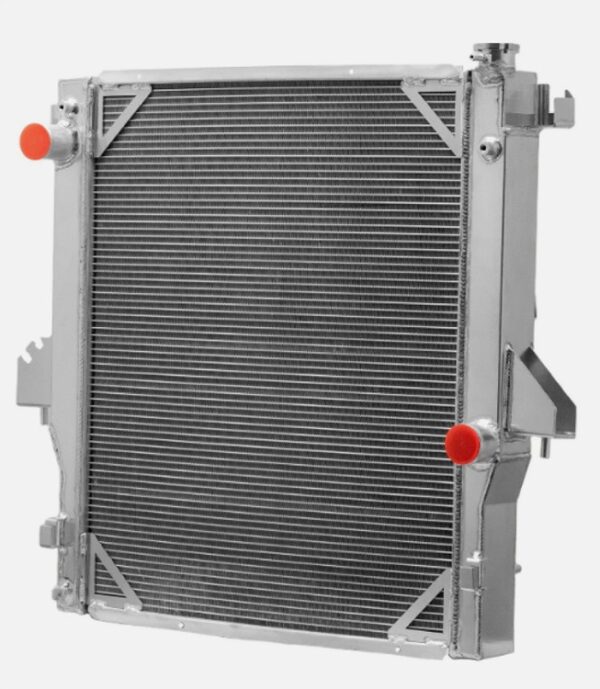
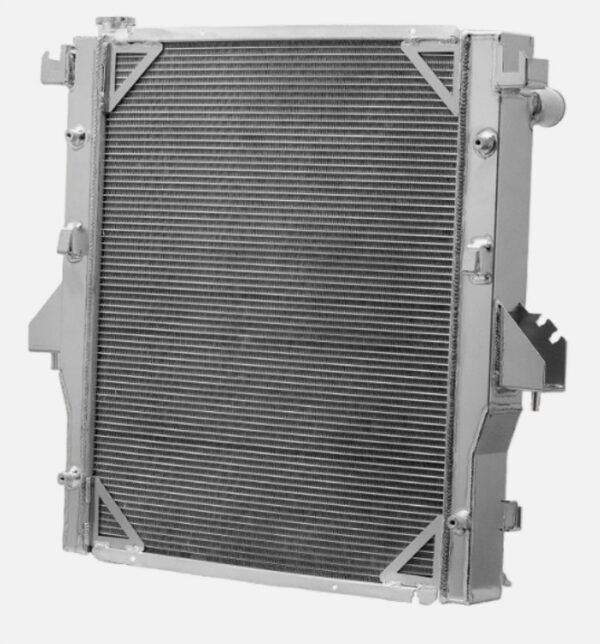
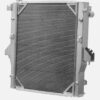
This American-made performance radiator is a direct replacement for the thinner factory unit on the 2004–2006 Ram SRT-10. It features two one-inch-thick furnace-brazed racing cores and a larger coolant capacity for maximum cooling performance. Designed for an exact factory fit.
All radiators are pressure tested to ensure no problems after installation. For maximum benefit, consider adding a cooler thermostat.
- Radiator Configuration: AA5052 aluminum core and tank
- Tank Weld: TIG welded
- Specification: High-performance racing spec
- Core Design: 2-row racing tube core
- Tank Material: AA5052 aircraft-grade aluminum
- Core Dimensions: 28.5″ height × 24″ width
- Overall Dimensions: 34.5″ height × 31″ width
- Upper Inlet: 1.97″ (driver side)
- Lower Outlet: 1.97″ (passenger side)
- Engine Oil Cooler: Not included
- Transmission Oil Cooler: Not included
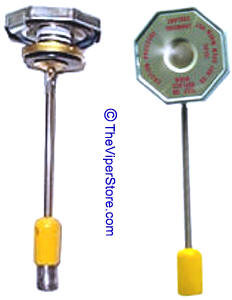
- Radiator Cap: CNC precision-machined
- Drain Plug: OEM-style brass petcock
Testing for Electrolysis in Cooling Systems
A voltmeter capable of reading both AC and DC is required to test cooling systems. The meter should read from zero up to the system’s maximum voltage in tenths of a volt. The meter leads must be long enough to reach between the coolant and the battery’s ground side. The ohm function of a voltmeter can also help locate resistance points in the electrical system that cause current to ground through the coolant instead of the intended circuit.
Procedure:
- Attach the correct meter lead to the ground side of the battery — negative to negative or positive to positive.
- Insert the second lead into the coolant, touching the coolant only.
- Read DC and AC voltage with all systems off. If a block heater is present, take a reading with it on. If a standby battery charger is connected, test with it running as well.
- Read DC and AC voltage with the electrical starter engaged.
- Read DC and AC voltage with the engine running and all systems on — lights, coolers, fans, heaters, air conditioning, cell phone, and two-way radio (both standby and transmit).
- This procedure tests the complete system, except for current that may be generated by the transmission or rear end — especially in vehicles with air bag or rubber-mounted suspensions. Grounding the rear end and transmission is strongly recommended.
- Voltage between 0 and 0.3 is normal in cast-iron engines. A reading of 0.5 volts can destroy a cast-iron engine over time, and 0.15 volts can damage an aluminum engine.
- The current will be AC if the problem is due to static electricity.
- If current is detected, turn off each system one at a time until the current stops — this identifies the faulty electrical system.
- Be cautious of starters, as their high amperage can damage the cooling system like an arc welder.
- Always replace the coolant if current is detected — electrical current destroys the protective chemicals in the coolant.
Failures Not Covered Under Warranty:
- Improper Flush: The cooling system must be thoroughly flushed, including the radiator, engine, overflow tank, hoses, and heater core. Failing to do so can mix coolants and contaminants, creating a corrosive mixture that damages the system.
- Corrosion: The correct coolant and distilled water mixture must be used. Water with high mineral content can cause severe problems for aluminum radiators, not seen in copper systems.
- Electrolysis: Electrolysis is the removal of the protective layer inside radiator tubes caused by improper grounding. Grounding issues can result from poor installation of aftermarket accessories or incorrect collision repairs.