Description
The very best thing you can do for your Viper truck radiator!
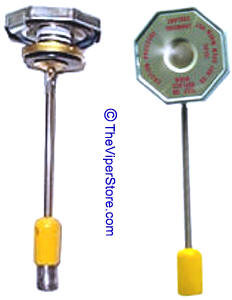
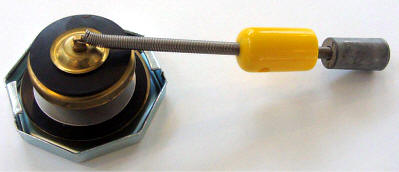
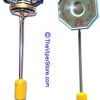
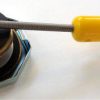
This cap features a sacrificial anode that prevents Electrolytic Metal Erosion (EME) inside your Viper’s engine cooling system. The cooling system of a Viper, like many other vehicles, carries a slight positive charge. This charge can cause erosion of the aluminum components in contact with the coolant.
The sacrificial anode is immersed in the coolant tank, and because it’s a softer metal, the EME attacks it instead of your engine. This extends the life of all metal components in the cooling system. You’ll be amazed to see the corrosion that appears on the anode after just two weeks — it’s eroding instead of your engine.
Explanation of Electrolysis
One failure mode associated with dirty coolant is known as electrolysis. Electrolysis occurs when stray negatively charged ions (electrical current) travel through the engine coolant. The electricity seeks the shortest path, and impurities in the coolant often create a path of least resistance that the current follows. The source of this stray electricity is often electrical engine accessories that are not properly grounded. A missing engine or transmission ground strap can also cause the coolant to become electrified.
Sometimes, the path of least resistance becomes the radiator, heater hose, or even the heater core. These components are usually well grounded and provide a ground path from the engine to the chassis through the semi-conductive coolant.
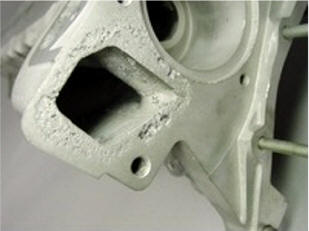
Electrolysis can destroy your engine quickly. Although it’s semi-normal to have very small amounts of voltage potential in your coolant system, values greater than about one-tenth of a volt can trigger reactions between the coolant and the engine metal. Electrolysis primarily affects aluminum engine components, resulting in pitting and scarring of the aluminum surface. This corrosion can cause leaks in the cooling system — especially around aluminum welds. Aluminum components are always the most vulnerable.
On aluminum engine blocks and heads, electrolysis damage is often visible near the thermostat area, where the metal has been eaten away by chemical and electrical reactions.
Adding an Anode Radiator Cap to the cooling system significantly reduces this erosion by providing positively charged ions to attract the negatively charged ions in the coolant. The anode is softer than aluminum, so it erodes first, protecting the aluminum parts and coolant passages of the engine.
This process is similar to how electrical discharge machines (EDM) work — passing current through metal to remove material. Unfortunately, electrolysis does the same thing inside your engine, zapping bits of metal in proportion to the electrical current flowing through the coolant.
This is where the Anode Radiator Cap comes in to help!