Description
Runs 20° Cooler!
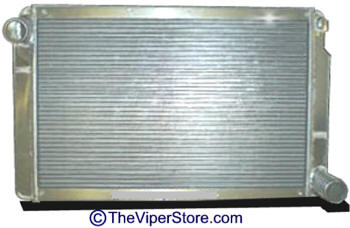
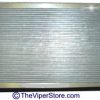
This performance radiator is a direct replacement for the thinner-cored factory unit on all 1994 to 2002 Vipers. Unlike other radiators, it does not require the fan to be changed on 1994–1998 models, saving you hundreds of dollars. The triple-pass design allows the water to be cooled by running through the radiator three times before it exits. It features two one-inch-thick furnace-brazed racing cores for maximum cooling efficiency.
Designed in the USA and manufactured in China to US specifications by a leading race radiator manufacturer specifically for the Dodge Viper. With a 170-degree thermostat installed, this radiator keeps your water temperature well below 190°F while cruising down the highway. All radiators are pressure tested to ensure trouble-free installation. New mounting hardware is included.
Before installing your new radiator, test your current one first.
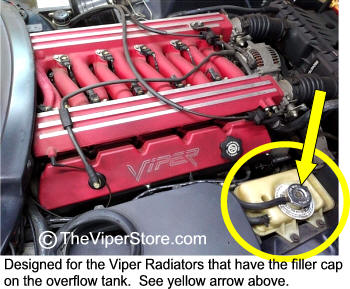
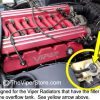
Note: Slip fit with regular fan; may require a slight 1/8-inch slice off the plastic housing of the large fan. It will not fit early Vipers with the filler cap on the radiator itself.
Testing for Electrolysis in Cooling Systems
A voltmeter capable of reading both AC and DC currents is required to test cooling systems. The meter should read zero to the maximum voltage of the system being tested in tenths of a volt. Meter leads must be long enough to reach between the coolant and the ground side of the battery. An ohm function of a voltmeter is helpful to pinpoint areas of resistance in the electrical system that may cause current to ground through the coolant rather than the engineered electrical circuit.
Procedure
- Attach the proper meter lead to the ground side of the battery, negative-to-negative or positive-to-positive.
- Install the second lead in the coolant, touching the coolant only.
- Read DC and AC voltage with all systems off. If a block heater is present, also take a reading with the heater turned on. If an automatic battery charger is present, take a reading with this system running.
- Read DC and AC voltage with the electrical starter engaged.
- Read DC and AC voltage with the engine running and all systems turned on: lights, coolers, fans, heaters, air conditioning, cell phone, and two-way radio (both standby and transmit).
- This procedure tests a complete system except for the current generated by the rear-end transmission. This is especially true with airbag suspensions, rubber pad suspensions, and rubber-mounted transmissions. Any current generated will travel up the drive shaft to ground through the engine coolant. Grounding rear ends and transmissions is strongly recommended.
- Voltage of 0 to 0.3V is normal in a cast-iron engine coolant. 0.5V will damage such an engine over time, and manufacturers report that as little as 0.15V can damage an aluminum engine.
- AC indicates a static electricity problem.
- If the coolant shows an electrical problem with all equipment turned on, turn off one system at a time until the current stops. The system that stops the current is the cause of the problem.
- Be careful with starters. They can damage a cooling system as much as a direct connection to an arc welder due to high amperage.
- Always change the coolant if a current is detected. Electrical current destroys the protective chemicals in properly inhibited coolant.
Failures Not Covered Under Warranty
- Improper Flush: Cooling systems require a thorough flush of the radiator, engine, overflow tank, hoses, and heater core. Failure to do so will mix coolants and contaminants, creating a harmful combination for the cooling system.
- Corrosion: The correct coolant and distilled water mixture specified by the manufacturer must be maintained. Water with high mineral content can cause issues for aluminum radiators that are not normally seen in copper radiators.
- Electrolysis: Electrolysis is the systematic removal of the protective layer inside radiator tubes caused by improper grounding. Electrical grounding problems can result from poor installation of aftermarket accessories or incorrect vehicle collision repairs.