
Dodge Viper FAQ: Everything Owners & Fans Ask
Part of our Dodge Viper: Everything You Need to Know series.
A collected, quick-answer resource for the questions we hear most often — from people just discovering the Viper to longtime owners looking for a specific fact.
History & Background
The concept debuted in 1989, with the first production model reaching customers for the 1992 model year.
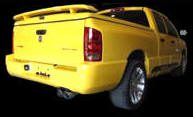
Five, spanning 1992 to 2017, plus the related RAM SRT-10 truck variant produced from 2004–2006. See our full Generations Guide for details on each.
Primarily due to a new federal ejection-mitigation safety regulation that the Viper’s cabin couldn’t accommodate, compounded by declining sales in its final years. See our full breakdown for details.
No — Dodge’s CEO has confirmed there are no current plans to revive the nameplate. See our full update on what Dodge is doing instead.
Specs & Performance
It ranges from 400 hp in the original 1992 model to as much as 650 hp in the final Gen 5 ACR trim. See our full specs comparison by generation.
Every generation used a large-displacement V10, ranging from 8.0L at launch to 8.4L in the final generations.
No — every Viper generation was offered exclusively with a 6-speed manual transmission.
It varies by generation, from roughly 160 mph in the original model up to 206 mph in the fastest Gen 5 trims.
Buying & Ownership
It varies enormously by generation, trim, mileage, and condition — from around $30,000–$40,000 for earlier generations in good condition to more than $100,000 for rare Gen 5 ACR and 1:28 Edition trims. See our 2017 Viper for Sale guide for detailed current pricing on the final generation.
Yes, particularly for Gen 1 and Gen 2 models. Many OEM parts have been discontinued by Chrysler, making specialist retailers essential. See our Viper Car Parts Guide for sourcing strategies.
Water pump failure, clutch wear, and steering rack issues are among the commonly reported problems, although issues vary by generation. See our full Maintenance Guide for a generation-by-generation breakdown.
Later generations, particularly Gen 4 and Gen 5, are generally considered more reliable than earlier generations due to accumulated engineering refinement. See our full reliability breakdown for specifics.
Comparisons
It depends on the specific model years being compared. The Viper often held a horsepower advantage, while the Corvette’s lighter weight frequently narrowed the real-world performance gap. See our full Viper vs. Corvette Z06 comparison .
The RAM SRT-10 shares its V10 engine with the Gen 3 Viper but is built on a pickup truck chassis rather than a sports car platform. See our full RAM SRT-10 vs. Viper comparison .
Still Have a Question?
If you didn’t find what you’re looking for here, explore the full Dodge Viper Guide hub, which links out to detailed guides on every topic — history, generations, maintenance, parts, and more.
Shop Now: Browse Viper Parts by Generation →