
Information Menu

1992-2002

2003-2010

2013-Current
- Viper SRT-10 Gen 5 (2013-Current)
- Viper SRT-10 Gen 4 (2008-2010)
- Viper SRT-10 Gen 3 (2003-2006)
- Dodge Viper RT-10 & GTS Gen 2 (1996-2002)
- Dodge Viper RT-10 Gen 1 (1992-1996)
- Dodge Viper 1998-99 GT2 & ACR
- Dodge Viper Overview
- Dodge Viper Articles (links)
- 1992-2010 Viper Paint Codes
- Dodge Viper Production numbers over the years
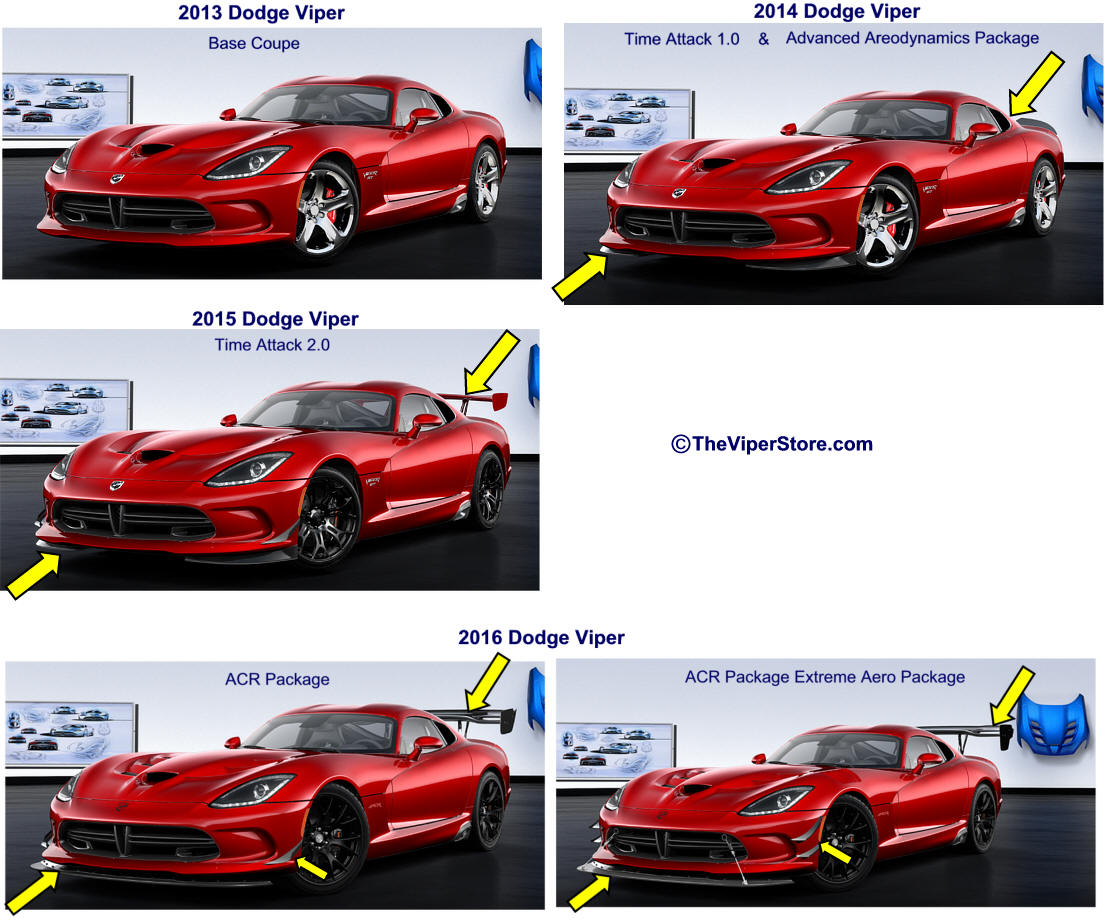
- Dodge Viper Gen5 Packages
2013-Current SRT Viper
| Pictures by model year: | |
| 2013 | SRT Coupe & SRT GTS |
| 2014 | SRT Coupe & SRT GTS |
| 2015 | SRT Coupe & SRT GTS |
| 2016 | SRT Coupe & SRT GTS |
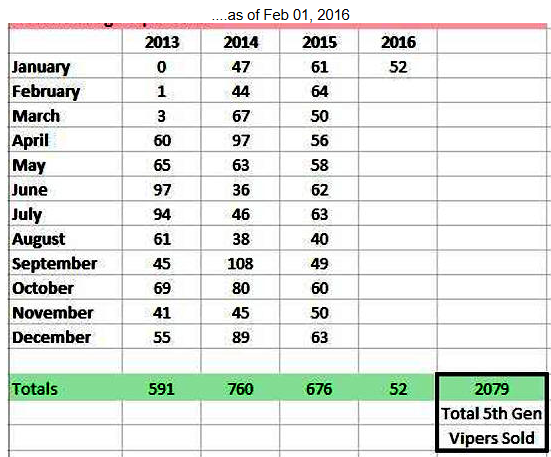
….as of Jul 05, 2016
The last of the special edition Dodge Vipers sold out rather quickly. Dodge has announced that all 206 units have been spoken for since going on sale less than a week ago on June 24. The 1:28 Dodge Viper Edition ACR was limited to 28 units and was sold out within 40 minutes, while the VoooDoo II Edition ACR, limited to 31 units, was spoken for within two hours. All 25 units of the Snakeskin Edition GTC were sold out within two ordering days and the GTS-R Commemorative Edition ACR, limited to 100 units, was also sold out within two ordering days. In responding to customer requests Dodge has also confirmed that it will introduce the Snakeskin ACR Edition and will build as many as 31 units.
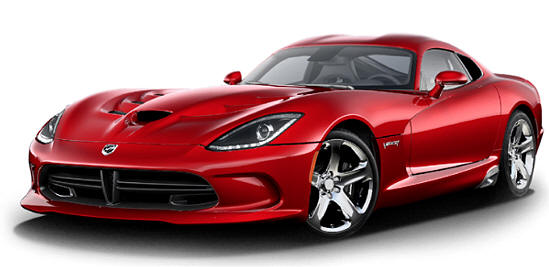
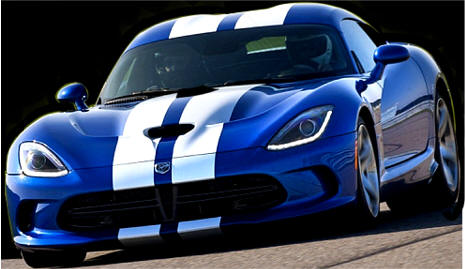
Watch a Viper Gen 5 being built video: Click Here
History
At a dealer conference on September 14, 2010 in Orlando, Florida, Chrysler Group and Fiat CEO Sergio Marchionne was reported to have concluded his remarks by unveiling a rolling 2012 Dodge Viper prototype. There would be no 2011 Viper. Quotes from the Detroit News from SRT CEO Ralph Gilles that hint to the future of the brand include:
- The new Viper is not based on anything else.
- The Viper cabin is very rearward and the hood is very long. Few cars in the industry are designed with those proportions anymore.
- I want the new Viper to be a more forgiving car to drive and accessible to more people. We’ve never had stability control on a high-performance car, which is about to happen on the new car.
The Viper was also on display for one night only in Salt Lake City, UT at the 11th Viper Owners Invitational or VOI 11 from September 30, 2010 to October 3, 2010. Ralph Gilles was present gathering feedback from the owners themselves on new exterior design of the snake. The Generation 5 badge was unveiled as well at this event on each dining table in the hall.
In Autumn of 2011, Ralph Gilles announced that the Gen V Viper would debut at the New York Auto Show in April 2012.
Public unveiling
Preliminary specifications include following:
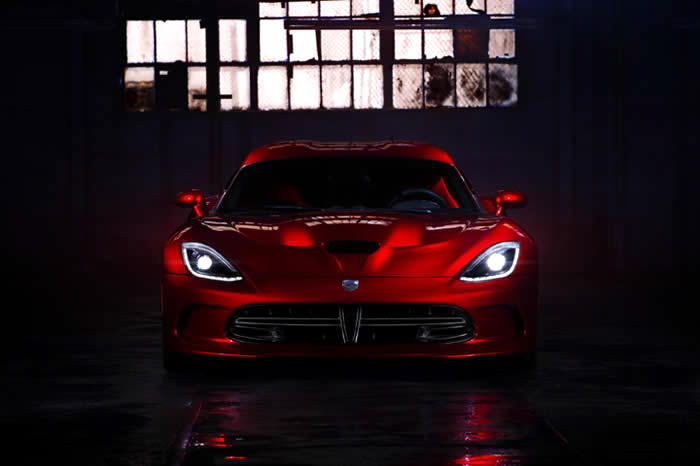
All-aluminum 8.4-liter V-10 rated 640 horsepower (477 kW; 649 PS) and at 600 lb·ft (813 N·m), Tremec TR6060 six-speed manual transmission with final drive ratio 3.55, 50 percent improvement in torsional stiffness over previous model, electronic stability control, traction control, 4-channel anti-lock brake system (ABS), carbon fiber and aluminum skin with .364 drag coefficient (Cd), Pirelli P Zero Z-rated tires, 4-piston Brembo brakes with fixed-aluminum calipers with vented 355x32mm diameter rotors, 20 mm lower seating position, 7-inch full-color customizable instrument cluster, Uconnect RA3 or RA4 Access in-vehicle connectivity system with optional SiriusXM Travel Link, Harman Kardon audio system, bi-xenon projector headlamps with white light-emitting diode (LED) daytime running lamps and LED turn signals, LED taillamps with integrating stop-and-turn illumination and snakeskin texture lens, five-spoke forged aluminum “Rattler” wheel with fully polished (standard), fully painted Hyper Black or fully painted low-gloss black finishes. Top speed of the SRT Viper is 206 mph (331kmh). It will be the first to feature Viper’s third logo, nicknamed “Stryker”.
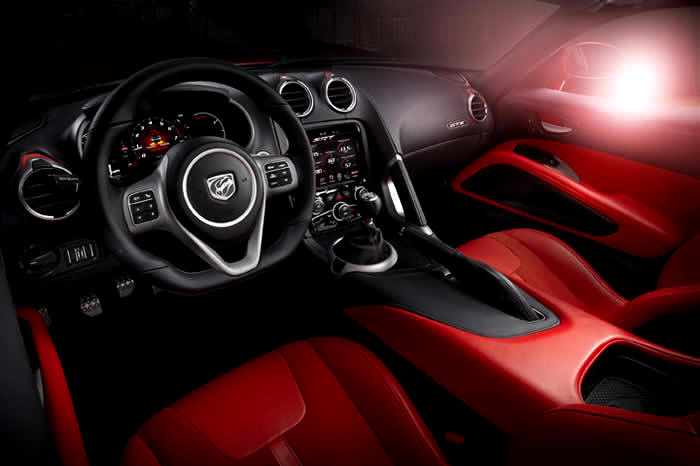
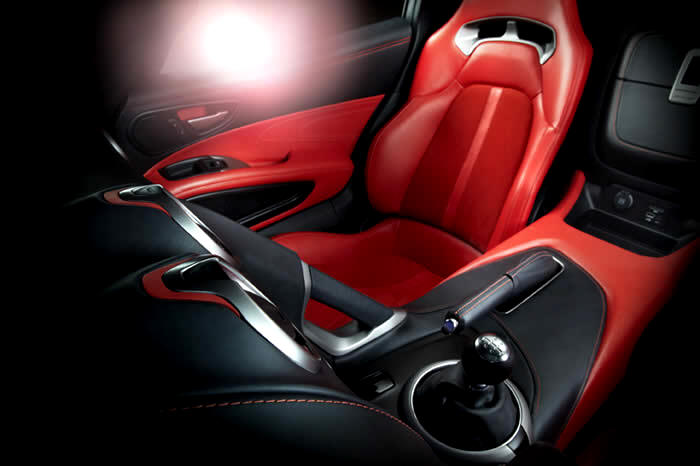
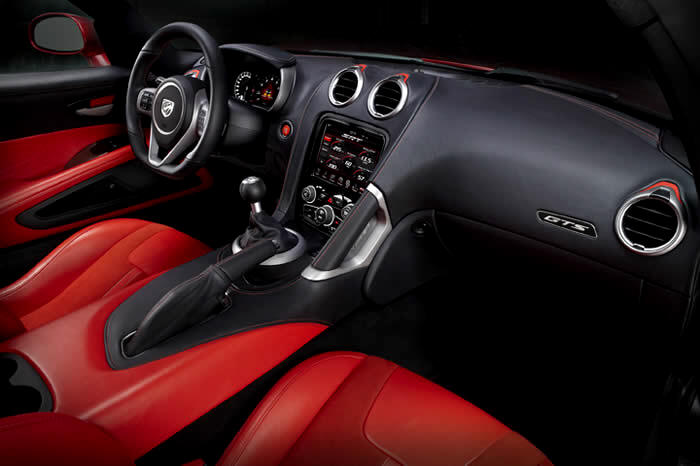
The SRT Viper GTS includes leather upholstery, accented colors in seats, doors, center console and stitching; gun metal trim on the cluster bezel, HVAC outlets, window switch bezels, shifter base, park brake bezel and the integrated passenger grab handle on the center console; Sabelt racing seats with Kevlar and fiberglass shell, carbon-fiber hood, roof, decklid and aluminum door panels, split six-spoke forged aluminum “Venom” wheels with polished face and graphite-painted pockets (standard), fully painted Hyper Black or fully painted low-gloss black finishes.
Optional SRT Track Package includes Pirelli P Zero Corsa tires, StopTech slotted two-piece rotors and ultra-lightweight wheels in Hyper Black or matte black finishes.
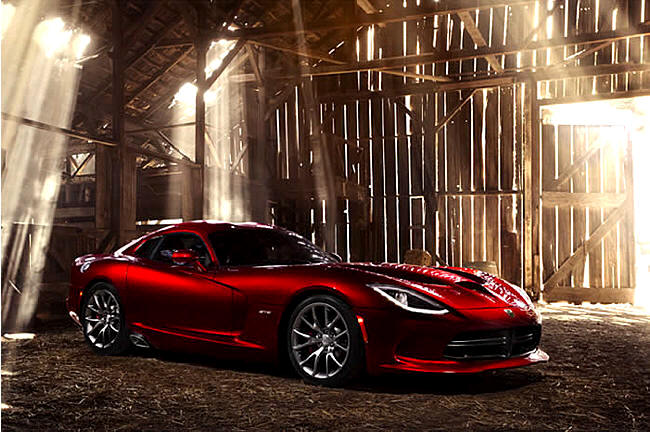
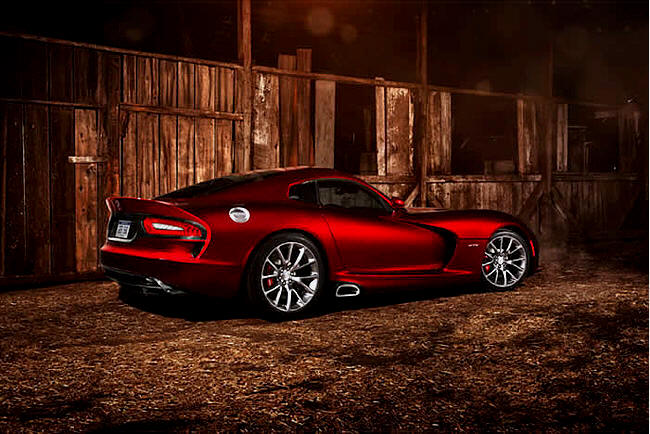
The 2013 SRT Viper was unveiled at the 2012 New York Auto Show.

SRT Viper GTS-R (2013–Current)
2013 SRT Viper GTS-R Le Mans LM GTE Pro Series Racing car
It is a race car designed for the GT class of the American Le Mans Series, designed and built by SRT Motorsports and Riley Technologies. It includes Michelin GT tires.
The vehicle was unveiled at the 2012 New York Auto Show.
The SRT Viper Racing team entering 2012 ALMS included Dominik Farnbacher, Marc Goossens, Ryan Hunter-Reay, Tommy Kendall, Jonathan Bomarito, and Kuno Wittmer.
2012 SEMA concept (2012)
The SEMA concept car is a version of 2013 SRT Viper coupe demonstrating Mopar products for SRT Viper. Changes include yellow body colour, carbon fiber parts at underhood, exposed carbon fiber performance cross X-Brace trimmed in a satin finish, a decal-cut Viper “Stryker” logo in the center of X-Brace, engine cover in carbon fiber and aluminum with the SRT logo, prototype aluminum oil filler cap with the SRT logo, a carbon fiber aero package, Mopar coil springs, full black interior with yellow accents, Sabelt hard-shell seats with a six-point safety harness, seat edging in black Katzkin leather with yellow accents in the perforations, Mopar billet aluminum shift knob, billet aluminum HVAC bezels and controls, carbon fiber bulkhead satchel with a universal integrated quick-release camera mount, polished chrome door-sill guards with the Viper logo, race-inspired sand-blasted aluminum Mopar bright pedal kit with the Viper logo etched in the pedals, footrest pedal with “Stryker” logo, optional “Track Pack” wheels finished in hyperblack, a front tow hook and an LED fog lamp kit.
The vehicle was unveiled in 2012 SEMA show.
The Mopar performance parts found in the SEMA concept car were sold as 2013 SRT Viper components.
2014 SRT Viper TA (2013-present)
2014 SRT Viper TA (Time Attack) package is a limited (33 units) version of SRT Viper coupe with Pirelli P Zero Corsa tires, matte black Sidewinder II wheels, two-mode Bilstein Damptronic suspension with firmer levels of damping and a smaller spread between modes than SRT Viper GTS; shock dampers, springs and road racing derived stabilizer bars retuned for optimal on-track performance; aluminum structural X-brace replaced by a lighter carbon fiber brace, brake calipers in black anodized finish with the Viper logo in Crusher Orange, Crusher Orange body colour with black 2D TA logos behind both front wheels, black Stryker logo on the front fascia, black interior with Crusher Orange accent stitching on the cloth seats, instrument panel (through the cowl), center stack, console, pull brake, shifter boot, shifter head, steering wheel and upper doors. Top speed is 206 miles per hour (331.5 km/h). In March 18, 2013 MotorTrend tested the SRT Viper TA in Mazda Raceway Laguna Seca to set a lap time against the 1.33.70 lap time holder Chevrolet Corvette ZR1. The SRT Viper TA beat the lap time in 1.33.62 seconds using Corsa Tires. The SRT Viper TA beat the original time in 1.30.78 seconds using Slick Tires.
An advanced exterior aerodynamics package includes carbon fiber front splitters and rear spoiler, while a carbon fiber rear appliqué accentuates the rear width proportions and adds another level of detail.©
The vehicle was unveiled in 2013 New York International Auto Show.
Production
SRT Viper will be built in the Conner Avenue Assembly Plant in Detroit, MI with production beginning in late 2012.
Production of SRT Viper TA set to begin at the Conner Avenue Assembly Plant in Detroit, beginning in third quarter 2013
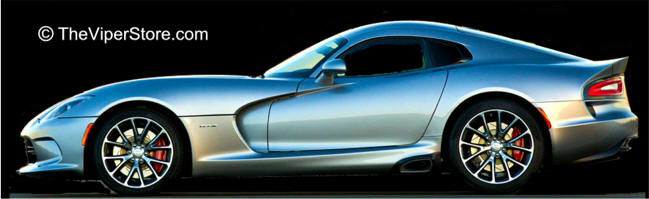
2015 viper
2015 SRT Viper became available in December 2014 with an increase of 5HP to the new drive train with a 1mpg improved mileage rating. Dodge also lowered the pricing on the new Vipers by as much as $15,000.00 to stimulate sales with new pricing starting at around $85,000.00.
“Other changes include a new Viper GT trim, which fills the gap between the base car and the loaded GTS. GT buyers get the two-mode, driver-adjustable suspension and five-mode electronic stability control system from the GTS, along with Nappa leather seats with Alcantara accents and contrast stitching. The Viper TA returns as the improved TA 2.0. The 2.0 part of the moniker refers to the updated aero package, which incorporates a bigger rear wing, new front dive planes, and a new carbon-fiber front splitter. The package improves downforce to 400 pounds at 150 mph versus the 2014 Viper TA’s 278 pounds at 150 mph. The rest of the TA’s myriad performance enhancements to the chassis, suspension, and brakes carry forward.
96 Viper TA 2.0 models will be built—32 each in Competition Blue, the new-for-2015 Yorange, and Venom Black and Stryker Purple. A special edition Viper GTS Ceramic Blue edition will be offered and limited to 40 cars. In addition to the namesake color, the car gets a number of other visual cues, like orange brake calipers, black chrome wheels, and carbon-fiber brake ducts, to name a few.” via Road & Track
SRT Viper 2013 by Dodge...was UNVEILED on 04-05-12
Order a new 2013 Viper BOOK today – Click Here!
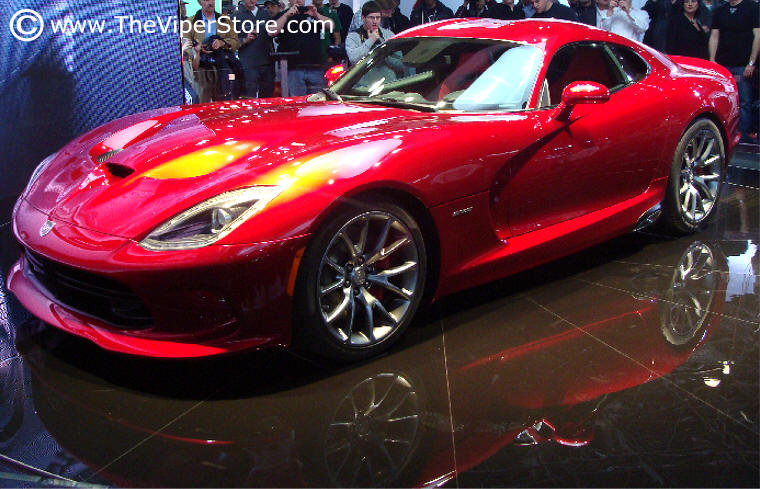
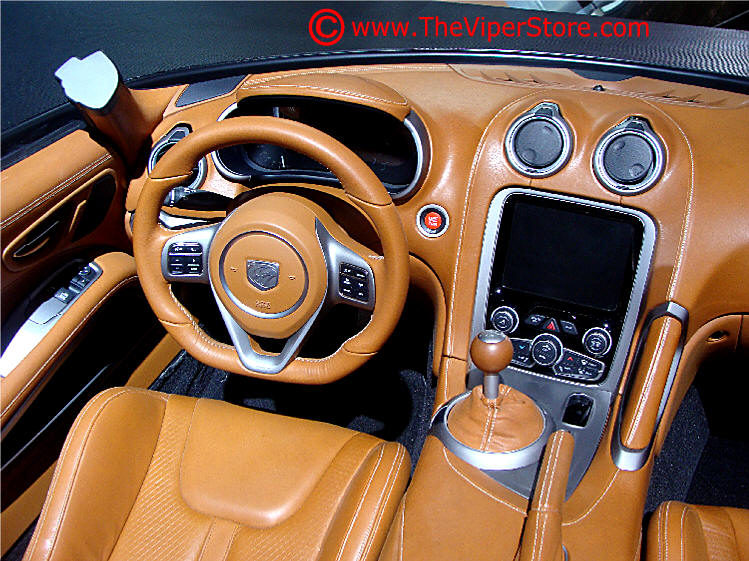
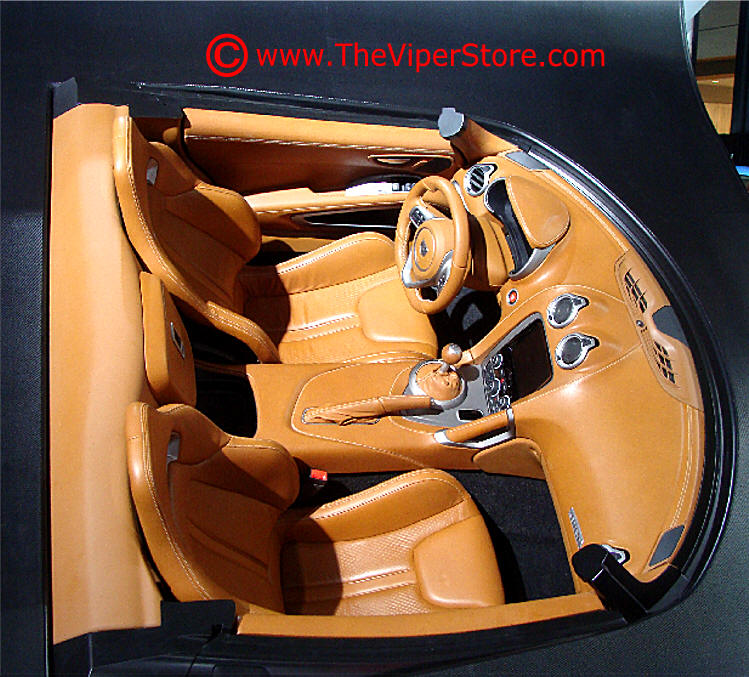
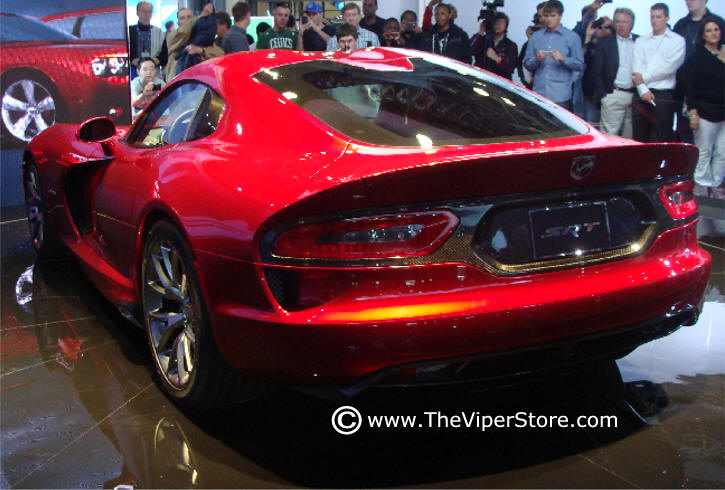
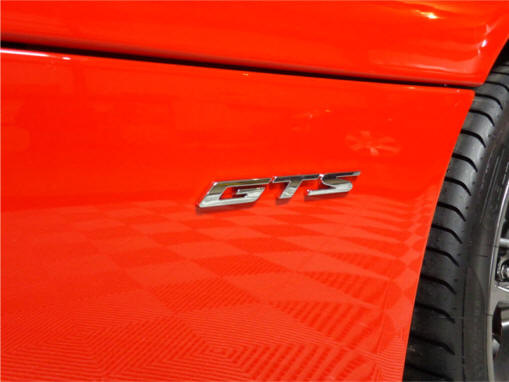
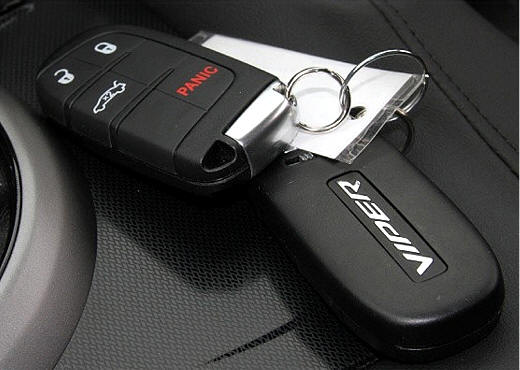

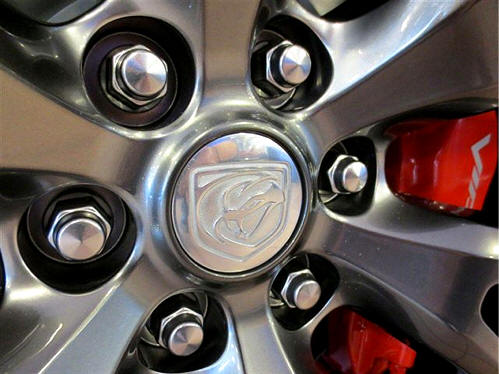
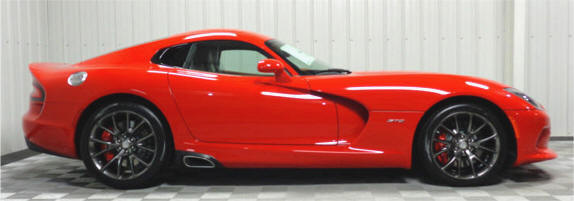
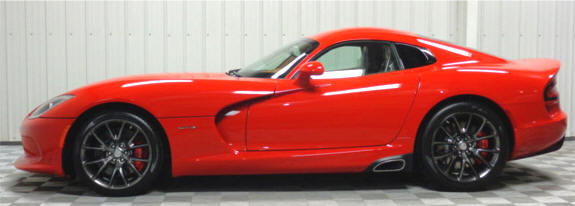
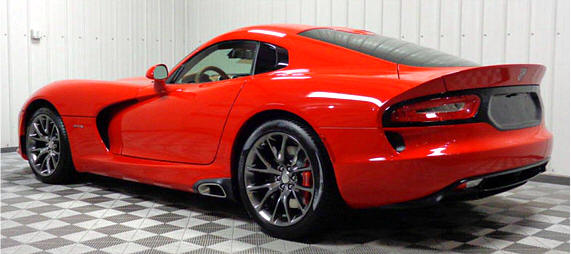
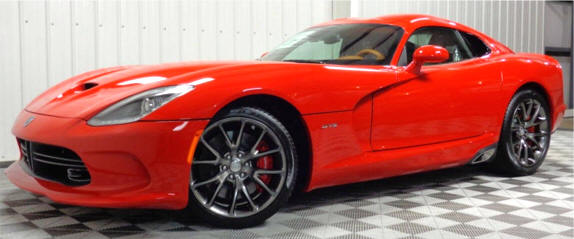
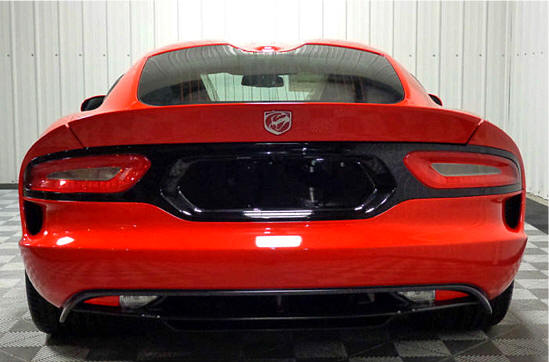
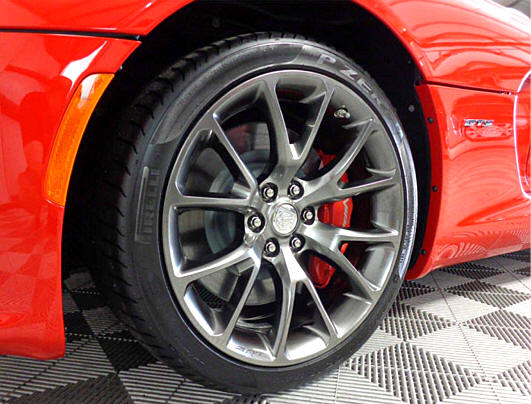
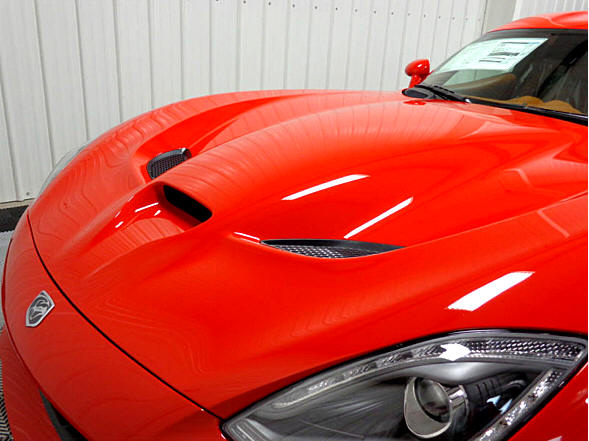
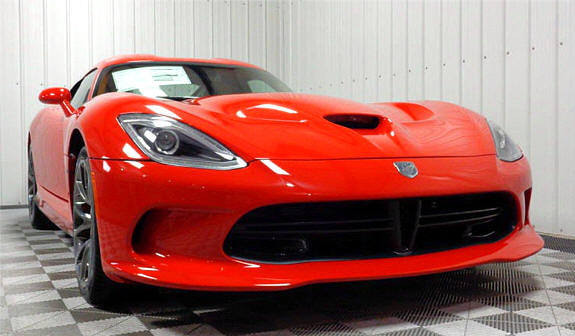

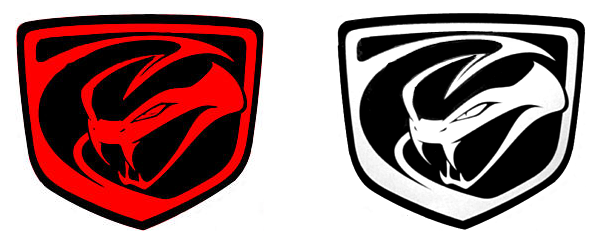
New Dodge SRT Viper "Striker" Logo for Gen 5 Official Logos
NEW 2013 Dodge SRT Viper "Stryker"
One clue as to the new V10 engine was in the Dodge Challenger V10 Drag Pak and Viper ACR-X, which share an 8.4-liter,
512 cubic-inch engine producing 640 horsepower.
The New SRT Viper is coming in two versions. The standard SRT Viper and the upgraded SRT Viper GTS. Both cars will have the same drive train. A V-10 engine with 640 HP. The GTS will have an upgraded interior and the large hood air intakes similar to the Ford GT40. It will come in nine colors with the ninth color still to be determined.
2008-10 Dodge Viper SRT-10
600 HP – 0-60 mph in less than 4 seconds!
| Pictures by model year: | |
| 2008 | SRT Coupe & SRT GTS |
| 2009 | SRT Coupe & SRT GTS |
| 2010 | SRT Coupe & SRT GTS |
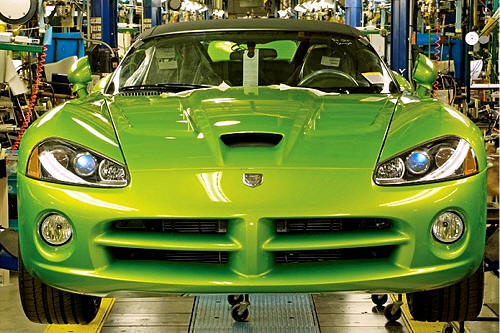
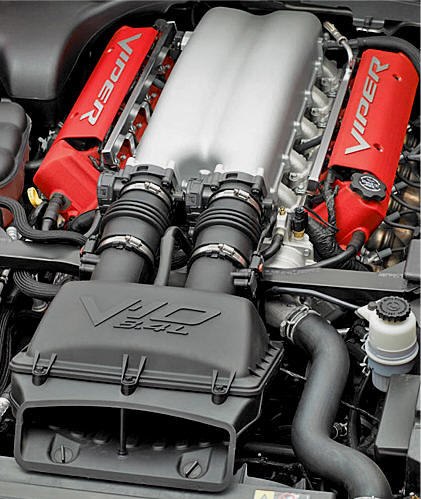
For 2008, the Viper received a 90 hp (67 kW) bump up to 600-HP (450 kW), a 25 ft·lbf (34 N·m) torque bump up to 560 ft·lbf (759 N·m) and the engine displacement increased up to 8.4 liters (510 ci/8354 cc) from 8.3, also receiving better flowing heads with larger valves, variable valve timing on the exhaust cam, and dual throttle bodies. The development of the engine was done with help from McLaren Automotive and Ricardo Consulting Engineers.
2008 Dodge Viper SRT-10 Convertible Retail Price: $83,145.00 2008 Dodge Viper SRT-10 Coupe Retail Price: $ 83,895.00
Changes outside of the power plant are minimal, but still influential. The T56 transmission has been replaced with the new Tremec TR6060, and a revised shifter has been paired with the new gearbox. Shifts are claimed to be 18% quicker than Chevrolet’s Corvette Z06. The Dana M44-4 rear axle from the 2003 model now has a GKNVisco differential that greatly help the tires in getting grip under acceleration. One last performance upgrade was the removal of run-flat tires; the new tires remove most of the minor flaws of the early Gen III models and should give the Viper nearly unmatched handling on any circuit. Another notable change is the reworking of the exhaust system, previous third generation Vipers had their exhaust crossover under the seats which resulted in a large amount of heat going into the cockpit, this was done initially to help improve the cars exhaust note, since the first 2 generations of Viper, which had no crossover, were criticized for their lackluster exhaust notes. For 2008, the Viper exhaust will utilize a new exhaust system with no crossover, reducing the heat that enters the cockpit, but still produces an exotic sound.
Car and Driver recently tested the car and got a 0-60 mph time of 3.7 seconds, a 0-100 mph time of 7.6 seconds and a Quarter Mile-time of 11.6 seconds at 126 mph (203 km/h). Dodge’s claims for top speed are 197 mph (317 km/h) and 202 mph (325 km/h), for the Roadster and Coupe respectively. Car and Driver also tested the Viper’s track performance, and managed a fast sub 3 minute lap time around Virginia International Raceway. The Viper’s time, despite hot weather, was faster than the Corvette Z06, Ford GT, Porsche 911 Turbo and 911 GT3, Audi R8, and other such cars. According to Car and Driver and Motortrend, the car’s slightly adjusted suspension setup and new diff gave it cornering ability as sharp as before with even better control, feedback, and response.
In October 24, 2007, Dodge issued the following:
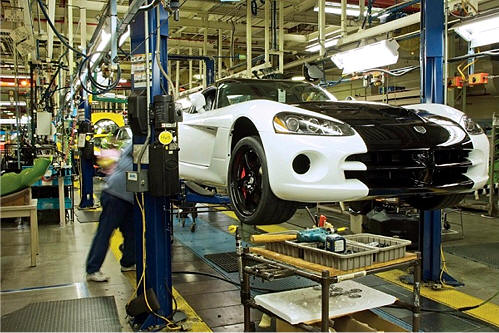
In a time when most manufacturing plants utilize hundreds of state-of-the-art robots to assemble vehicles, a unique plant in Detroit is producing hand-built performance vehicles.
At the Conner Avenue Assembly Plant, workers hand-build the new Dodge Viper SRT10 and all-new 600-horsepower 8.4-liter SRT V-10 engine. Utilizing 26 work stations on a 705-foot-long assembly line, 48 hand-picked UAW workers assemble each vehicle. Each vehicle remains stationary for up to 49 minutes per work area as the craft people make any necessary adjustments. This process eliminates traditional repair stations with all procedures verified by team members.
Each Dodge Viper is primarily made of seven component modules (instrument panel, fuel tank, suspension corner modules, wheels and tires, cooling module, lift gate assembly and full dressed engine). With the exception of the engine, all modules are shipped to the Conner facility from other locations. Stamping, casting and welding all take place off-site with body panels arriving already painted.
In a process normally performed only on race cars, an alignment machine sets caster and camber at normal ride height, at jounce and at rebound (upward and downward travel of suspension). Typical factory alignments set caster and camber in the normal ride height position only. The 2008 Dodge Viper SRT10 is the only U.S. production vehicle set up for such alignment at the factory.
“Our assembly process is just as exceptional as the car,” said Melissa Holobach, Plant Manager – Conner Avenue Assembly Plant, Sterling Heights Vehicle Test Center (SHVTC) and Pilot Operations. “The process of building these vehicles by hand has allowed us the freedom to produce race-inspired performance without the constraints of mass production,” Holobach said. “Our workforce is committed to producing the best vehicles possible and it shows in their commitment to detail.”
The all-new 600-horsepower 8.4-liter SRT V-10 engine is built next to the vehicle on a 24-station circular line by nine Craftspersons. These nine workers assemble and certify each engine before they are installed in the chassis.
Each Dodge Viper is tested in place on the assembly line utilizing special rollers. At this stage the vehicle is a rolling chassis without its body panels. During this “roll test” it is driven through all six speeds of the transmission, up to 90 mph to verify vehicle function.
Since its introduction as a concept car at the 1989 North American International Auto Show in Detroit, the Dodge Viper has captured the hearts and imagination of enthusiasts around the world. The 2008 Dodge Viper SRT10 is offered in both Roadster and Coupe versions. With its dramatic styling and 600 horsepower, the 2008 Dodge Viper SRT10 is the ultimate American sports car.
With 600 horsepower – 90 more than before, and 0-to-60 performance in less than four seconds, the 2008 Dodge Viper SRT10 sets a new benchmark for the ultimate American sports car.
The new 2008 Dodge Viper SRT10 will arrive in Dodge showrooms in North America this fall with a new level of customization options, including five new exterior colors, four new interior color combinations and a new wheel design.
Old material from 2003
In 2003, a plant worker told us that Viper staffing has been reduced, and there has been sizable turnover in the upper reaches of plant management. More troubling are changes in plant management and what appears to be condescending treatment of the skilled craftsmen who build Vipers (and who used to build Prowlers).
A factory worker sent us copies of several plant announcements which fundamentally change the way Vipers have been built since their introduction over ten years ago. Originally, they were made by craftsmen who controlled the line, which did not move until each person had done their job. This ranged between an hour at most, 37 minutes at present – the shortest time so far. Now, the line moves automatically, unless a stop button is pressed – and people have been advised not to press the button. This might sound reasonable, but the Viper is not a full production car; the parts are at a prototype level of fit, with holes sometimes containing flash, brackets sometimes not bent correctly, and formed parts sometimes needing to be tweaked.
Management has benchmarked the Corvette and other vehicles and is trying to build a car with prototype level parts but production-car times; despite the fact that the Corvette is built as a production car, with much higher volumes. With the Viper no longer being emphasized as an image builder (perhaps because it hasn’t any Mercedes parts), workers seem to believe that, if the Viper does not earn a substantial profit, it will be pulled.
The memos are interesting at least as much for their tone as for their content. Note that in the 9/16 memo, the new manager – who didn’t officially start until 9/18 – complains about employees eating, sleeping, etc. during work hours. An employee called this “ridiculous and insulting.” The Viper plant has only about one hundred people – once considered the best Chrysler craftpeople. This behavior would be hard to get away with, and unlikely to begin with. Ms Williams came from Toyota, which is normally seen as having more respect forits workers.
Operations have reportedly shut down due to lack of parts on many occasions, though breakeven is at 12 cars per day and average is about 11 per day. Management’s stated goal is to produce 13 per day.
For 2008, the Dodge Viper SRT will use an 8.4-liter aluminum V-10 engine that produces a full 600 horsepower and 560 lb.-ft. of torque. 0-60 times are under four seconds, 0-100-0 in under 12 seconds, and braking 60-0 comes in less than 100 feet.
oh20 reported that the 2008 Viper Coupe and Convertible both averaged over 200 mph around the Transportation Research Center’s 7.5 mile oval test track in Ohio. The convertible even averaged 197 mph with the top down. Both have similar drag (aerodynamic) numbers, according to representatives of the SRT team.
SRT powertrain engineers had to not only increase performance, but also comply with regulatory requirements such as federal Tier 2, Bin 5 and California’s Low Emissions Vehicle (LEV) 2 mandates. Working with specialists from McLaren Performance Technologies and Ricardo, Inc., SRT engineers began by following the racer’s basic formula for more power: bigger displacement, more efficient breathing and higher engine speed.
The new Dodge Viper SRT10’s deep-skirted V-10 aluminum engine block was bored out 1 mm, raising the displacement to 8.4 liters from 8.3 liters. With strengthened bulkheads and improved water jackets for better cooling, the block includes pressed-in iron cylinder liners and cross-bolted main bearing caps for strength and durability.
Horsepower didn’t come only from the engine, the use of a plastic hood allowed engineers to increase the airflow through the hood scoop; openings along each side are not just for show, but to circulate air within the engine compartment, to keep power going with a warm engine. It also lowered weight and helped keep the Viper costs down. Other body panels are also plastic, and carbon fiber is used for some structural parts to keep weight down.
The Viper SRT10’s 8.4-liter engine breathes through new cylinder heads equipped with Computer Numerically Controlled (CNC)-shaped combustion chambers, larger valves and Variable Valve Timing (VVT). VVT electronically adjusts when the exhaust valves are open and closed according to engine speed and load, allowing the engine to “breathe” cleaner and more efficiently.
The 2008 Dodge Viper SRT10 V-10’s two-piece intake manifold combines a cast aluminum lower with smooth runners for better air flow, bolted to a die-cast aluminum upper plenum. A revised air-cleaner box with a low-restriction filter sends air through a dual electronic throttle control into the intake module.
The air-fuel mixture is ignited by platinum-tip spark plugs fired by individual plug coils mounted on the cylinder-head covers. The pistons themselves are equipped with larger-diameter floating pins with bronze bushings for higher loads. Forged powder-metal connecting rods are secured with aircraft-quality fasteners for increased fatigue strength.
Engine lubrication is managed by a larger oil pump and a swinging oil pickup adapted from Viper competition engines, to improve oil pressure in high-rpm and hard-cornering conditions.
Spent gases exit through tubular air-gap headers, which improve exhaust flow and ensure quick catalyst light-off. The headers’ stamped stainless-steel outer shell acts as a thermal heat shield for the individual stainless-steel runners that contribute to better flow separation and exhaust tuning.
The 2008 Dodge Viper SRT10’s V-10 channels its power through a new, smaller-diameter, twin-disc clutch (a change from the larger-diameter, single-disc setup). The new clutch reduces rotating inertia by 18 percent, resulting in reduced clutch-pedal effort and improved engagement feel.
The TR6060 transmission is the latest evolution of the Tremec T56 six-speed manual. It features 10% wider gears for higher torque capacity, and a new synchronizer package. A new shifter system results in reduced shifter travel. There is also now a provision for adding an external transmission cooler.
2008 Viper braking, ride, and handling
14-inch brake rotors are gripped by Brembo 44/40 dual opposing piston calipers in the front and by Brembo 42/38 dual opposing calipers in the rear. Anti-lock braking (ABS) prevents lockup during hard braking. This system results in a benchmark braking performance of 60-to-0 mph in less than 100 feet.
The ride and handling of the 2008 Dodge Viper SRT10 is defined by a race-bred, fully independent, four-wheel suspension featuring lightweight, high-performance aluminum control arms and knuckles, damped by lightweight coil-over shock absorbers. SRT engineers retained the tried-and-true Dana M44-4 rear axle and outfitted it with a new GKN Visco-Lok speed-sensing limited-slip differential for improved traction.
The Dodge Viper SRT10 rides on polished, forged aluminum, 18 x 10-inch front and 19 x 13-inch rear wheels now available in three styles: the five-spoke, the H-spoke and the all-new Razor wheel with five U-shaped spokes. The wheels are clad in Michelin® Pilot® Sport PS2 tires. The four-groove tread-design tires provide maximum grip, reduced road noise and superior handling in both wet and dry conditions.
2008-2010 Dodge Viper styling and bodies
The new 2008 Dodge Viper SRT10 will arrive in North America this summer with four new interior color combinations, and a new wheel design. Buyers can now choose the bezel finishes on the center instrument panel and console.
The 2008 Dodge Viper SRT10 is still available in Roadster and Coupe forms. Both feature a new hood with a larger, more efficient hood scoop for air induction and larger, functional hood louvers to cool the 600-horsepower V-10 engine underneath.
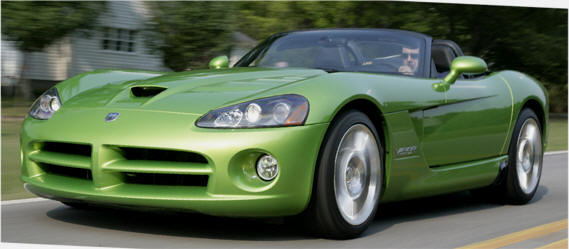
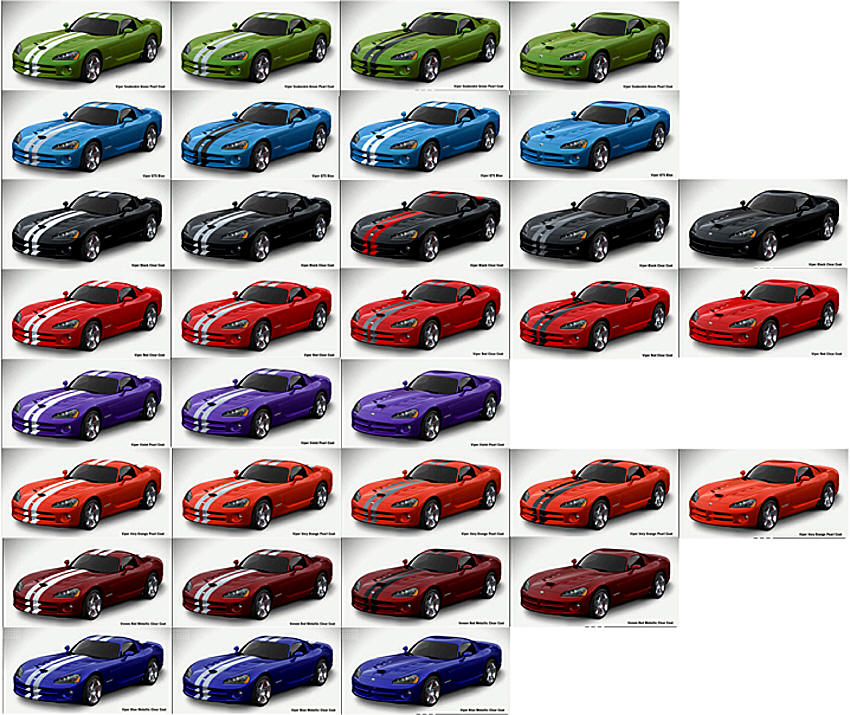
Eight exterior colors will be introduced throughout the model year – five of which are new – including Venom Red, Snakeskin Green, Viper Violet, Viper Orange and Bright Blue. Racing stripes continue to be an option with six dual painted stripe colors available: white, black, silver, graphite, blue and red.
In fact, the only body panels shared by the two Vipers are front fascia and fenders, hood and doors. However, the iconic Viper SRT10 design cues have been maintained, including the crosshair grille, deep-cut side scallops, swept-back fenders, and lowered hood lines.
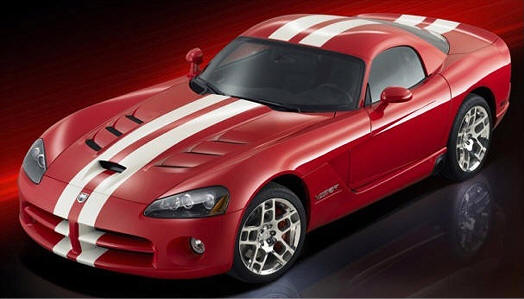
The Dodge Viper SRT10 Coupe’s hard top with its “double bubble” styling makes it more torsionally stiff than the Roadster; it has increased downforce and high-speed stability with its sloping roofline and deck-lid spoiler, as well as an additional 6.25 cubic feet of trunk space than the Viper SRT10 Roadster, for a total of 14.65 cubic feet. The roof and headliner structure offer more room to accommodate a safety cage, while maintaining as much headroom as possible.
The 2008 Dodge Viper SRT10 Roadster and Coupe cockpit retains its characteristic red push-button starter and performance-oriented, functional instrument panel with center-mounted tachometer and 220-mph speedometer.
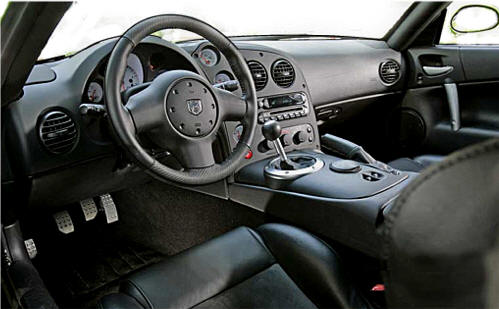
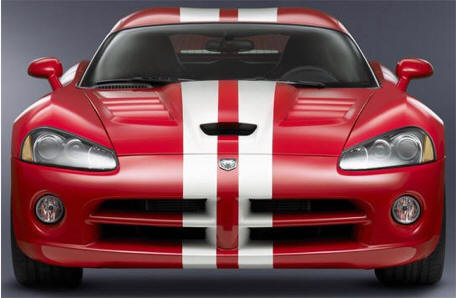
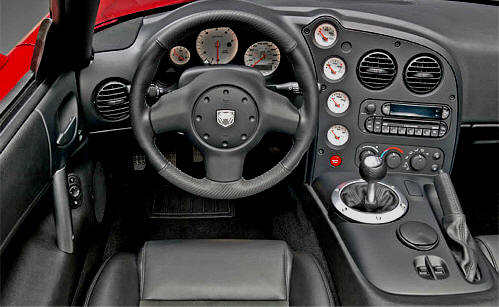
The 2008 Dodge Viper SRT10 will be hand-built at the Conner Avenue Assembly Plant in Detroit.
2008-2010 Dodge Viper SRT10 Safety and Security
The following safety and security technologies are featured on the 2008 Dodge Viper SRT10:
- Adjustable Pedals
- Advanced Multistage Front Air Bags with Occupant Classification System (OCS): Inflates with a force appropriate to the severity of the impact. The OCS measures the conditions for activation or deactivation of the passenger side front air bag based upon the weight of the occupant
- Anti-lock Brake System (ABS)
- BeltAlert: Periodically activates a chime and illuminates an icon in the instrument cluster to remind the driver and front passenger to buckle up if a vehicle is driven without the driver being properly belted
- Center High-mounted Stop Lamp (CHMSL): The shelf-mounted center high mounted stop lamp uses light emitting diodes (LEDs) for longer life Constant Force Retractors (CFR): Distribute force or load exerted on a seat belt, and then gradually release the seat belt webbing in a controlled manner
- Crumple Zones: Designed to compress during an accident to absorb energy, decreasing transfer of that energy to the occupants
- Energy-absorbing Steering Column: The manual-adjust steering column uses two hydroformed coaxial tubes that can move relative to each other to allow the column to move forward for enhanced energy absorption during a crash. The power-adjust steering column employs a calibrated bending element that deforms during column stroke for optimal energy management
- Interior Head-impact Protection: Interior pillars above the beltline and instrument panel – including areas around windshield and rear window headers, roof and side rail structures, and shoulder-belt turning loops – specifically designed to limit head-impact force
- Knee Bolsters: The lower instrument panel and the glove-box door are designed to properly position the occupant, enabling the air bags to work effectively
- Remote Keyless Entry (RKE)
- Tire-pressure Monitoring (TPM): Pressure-sensor modules within the valve stems of all four wheels send continuous radio-frequency signals to a receiver, and the system informs occupants when the pressure is too low
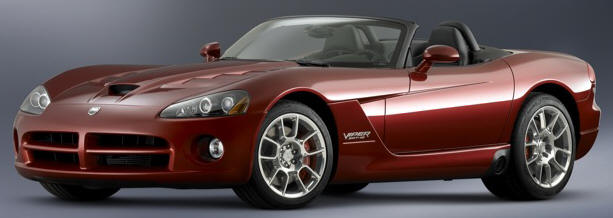
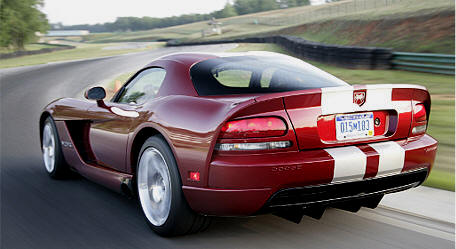
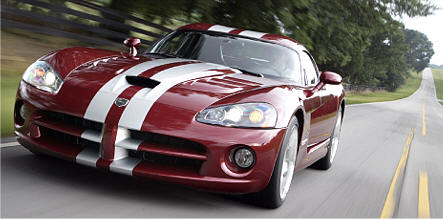
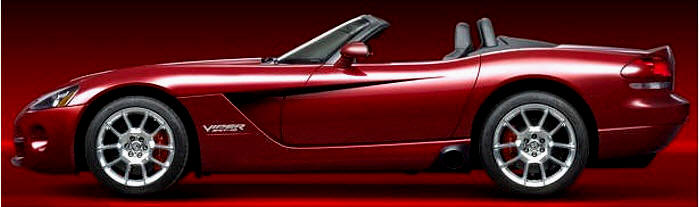
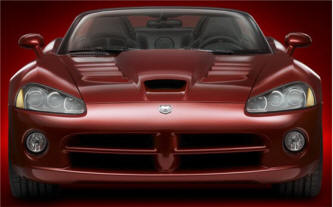
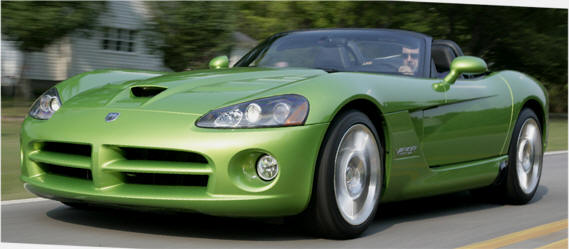
2008-2010 Dodge Viper SRT-10 Performance & Standard Features
– 8,380 cc 8.4 liters V 10 front engine with 103.0 mm bore, 100.6 mm stroke, 10.2 compression ratio, overhead valve, variable valve timing/camshaft and two valves per cylinder EWE
– Premium unleaded fuel 91
– Multi-point injection fuel system
– 16.0 gallon main premium unleaded fuel tank 13.3
– Power: 447 kW , 600 HP SAE @ 6,100 rpm; 560 ft lb , 760 Nm @ 5,000 rpm
2008 Dodge Viper Handling, Ride & Braking Standard Features
– Four-wheel ABS
– Four disc brakes including four ventilated discs
– Immobilizer
– Rear limited slip differential
– Wishbone front and rear suspension independent with stabilizer bar and coil springs
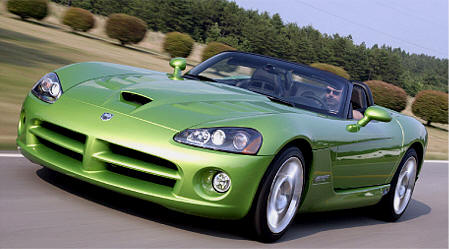
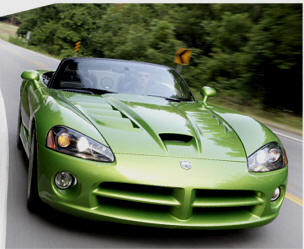
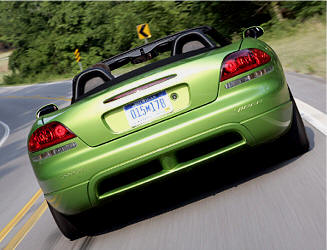
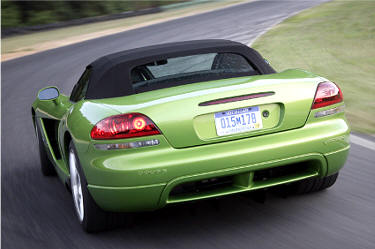
2008 Dodge Viper Exterior & Aerodynamics Standard Features
– Body color front and rear bumpers
– Fixed hoop convertible rollover protection
– Manual softtop convertible roof with glass rear window
– Driver and passenger power body color door mirrors
– External dimensions: overall length (inches): 175.6, overall width (inches): 75.2, overall height (inches): 47.6, wheelbase (inches): 98.8, front track (inches): 61.6, rear track (inches): 60.9 and curb to curb turning circle (feet): 40.5
– Front fog lights
– Projector beam lens Bi-Xenon headlights
– Luxury trim alloy & leather on gear knob
– Black paint
– Fixed rear window with defogger
– Tinted glass on cabin
– Weights: curb weight (lbs) 3,440
– Windshield wipers with variable intermittent wipe
2008 Dodge Viper Interior Standard Features
– 12v power outlet: front and 1
– Air conditioning
– Element antenna
– Peripheral anti-theft protection
– Front ashtray
– RDS audio system with AM/FM, Disc Autochanger and six-disc remote changer
– Cargo capacity: all seats in place (cu ft): 8.4
– Front seats cigar lighter
– Clock
– Full dashboard console, full floor console with covered storage box
– Courtesy lights
– Door ajar warning
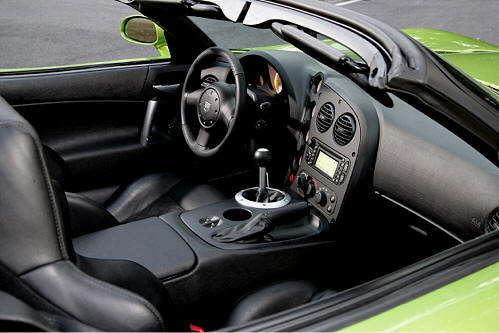
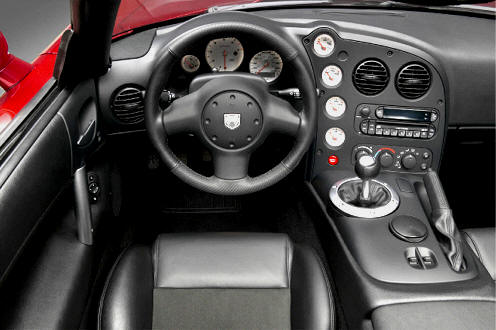
– Driver front airbag with multi-stage deployment, passenger front airbag with occupant sensors and multi-stage deployment
– Sports driver and passenger seat
– 3-point reel front seat belts on driver seat and passenger seat with pre-tensioners
– Front seat center armrest
– Two head restraints on front seats
– Headlight control with time delay switch-off
– Height adjustable pedals
– Illuminated entry system
– Internal dimensions: front headroom (inches): 36.5, front leg room (inches): 42.4 and front shoulder room (inches): 54.1
– Low tire pressure indicator
– Remote power locks
– Power steering
– Front power windows with two one-touch
– Front reading lights
– Rear view mirror
– Remote control remote trunk/hatch release
– Suede seat upholstery with additional leather
– Seating: two seats
– Seven speaker(s)
– Leather covered steering wheel with tilt adjustment
– Tachometer
– Ventilation system
2008 Dodge Viper Interior Standard Features
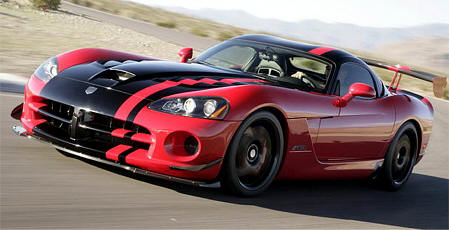
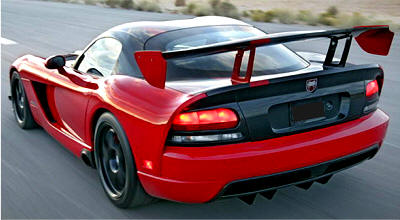
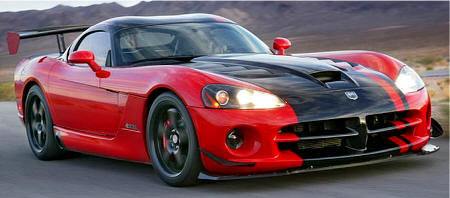
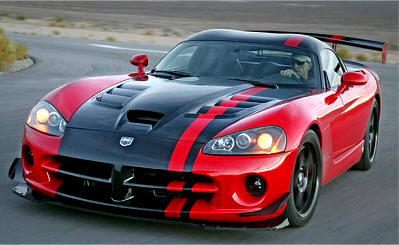
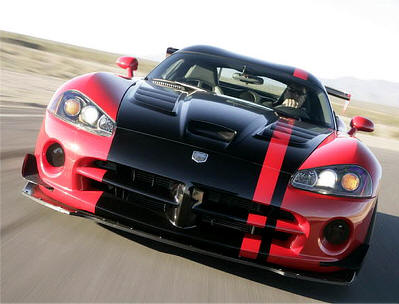
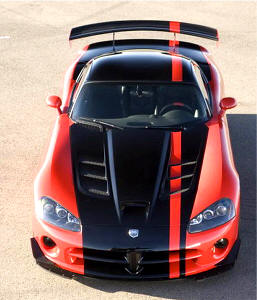
2008 VIPER SRT-10
By color scheme:
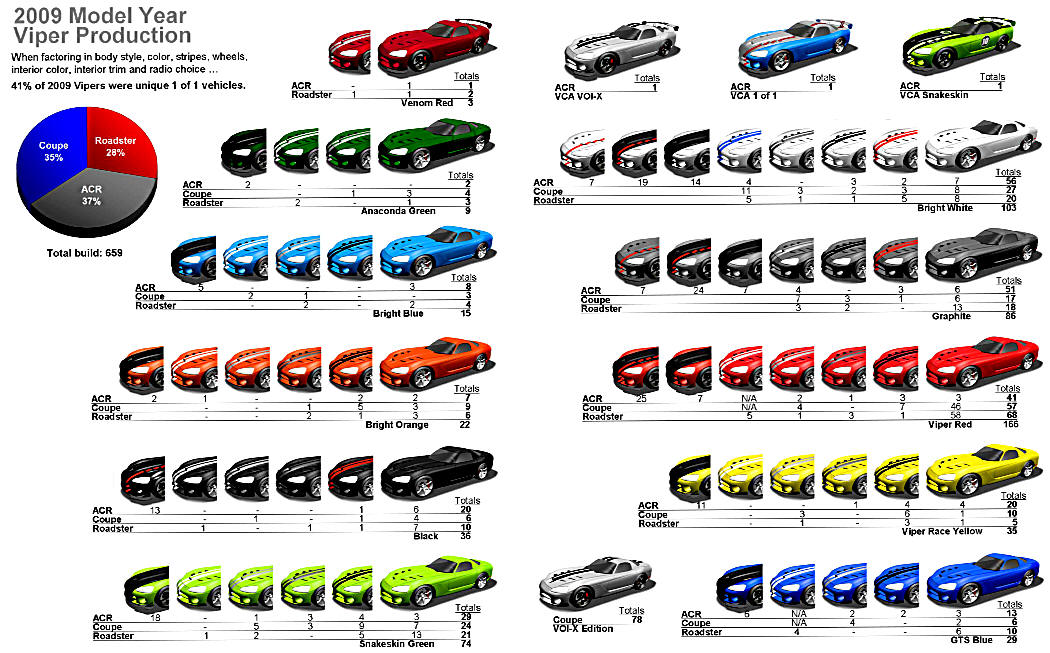
2009 VIPER SRT-10
Production Break down by color scheme:
2010 Doge VIPER SRT-10
Only 500 to be built including
Just the Facts:
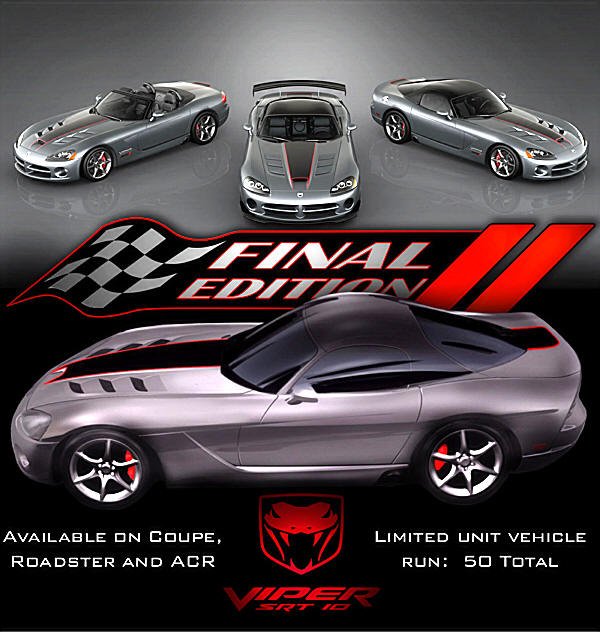
- Only 50 Final Edition Dodge Vipers will be built.
- That figure includes 20 coupes, 18 roadsters and 12 ACRs.
- All will be painted gray with a black center stripe outlined in red.

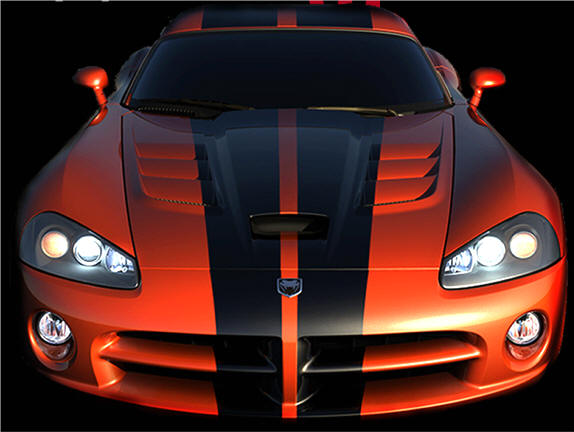
2010 VIPER SRT-10 Color scheme:
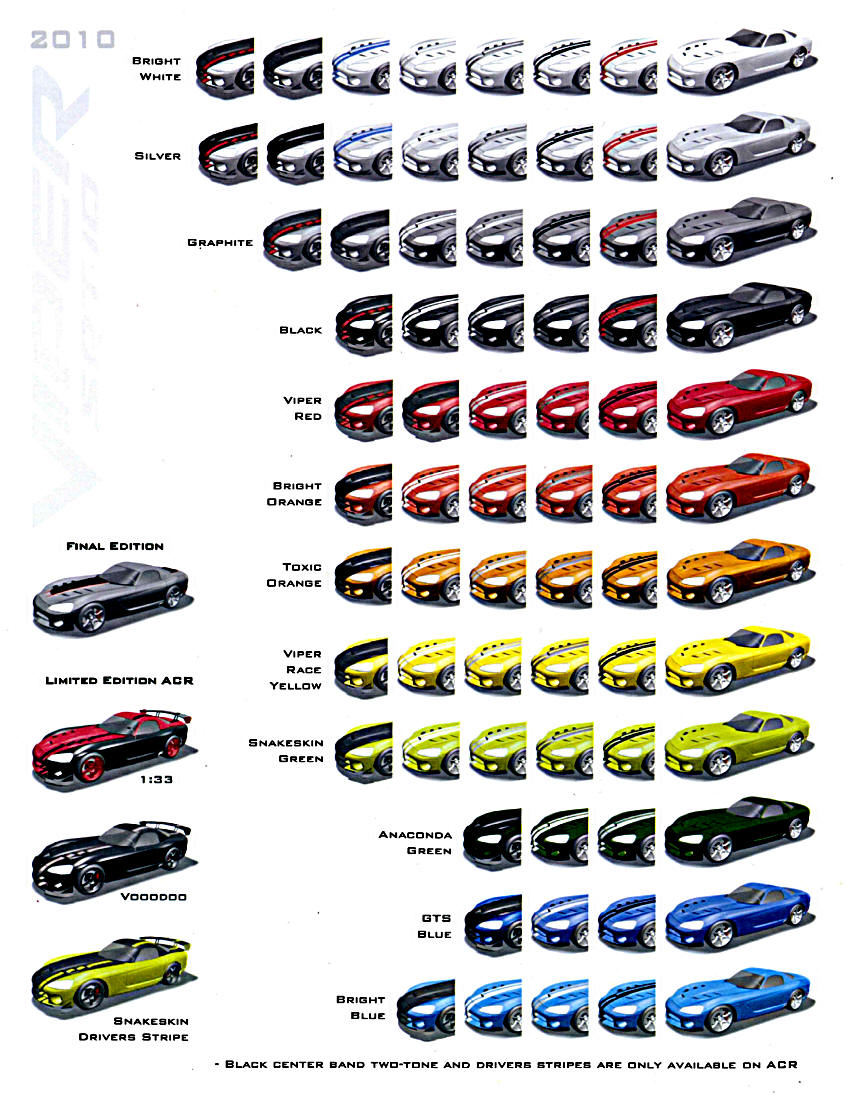
2010 Viper ACR Color Scheme
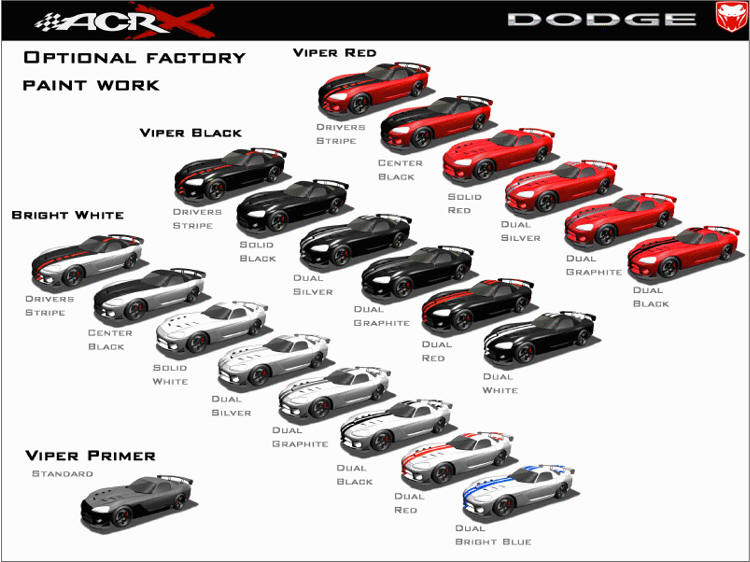
AUBURN HILLS, Michigan
Dodge took the wraps off its 2010 Viper SRT10 Final Edition models on Tuesday. The company said it will build 20 coupes, 18 roadsters and 12 ACRs when the Final Edition models debut in early summer.
True to their name, the Final Edition models celebrate the Viper’s final year of production. Output will be significantly less than the 2002 Viper Final Edition coupes and ACRs, which totaled 360 units, the automaker said. Pricing has not yet been announced.
Each model gets a Graphite Clear Coat body with a painted black center stripe outlined in red. Coupe and roadster models get six-spoke wheels painted in anthracite, while ACR models will come with five-spoke, black “Sidewinder” wheels.
The black interior has custom red accent stitching, red painted halo surrounds on the gauge cluster and bright stainless-steel screws in the center stack bezel. You’ll find an individually numbered plaque on the shifter bezel. The Final Edition models are equipped with the usual 600-horsepower 8.4-liter V10 engine.
2008 - 2010 Dodge Viper cars: up to 600 horsepower
For 2008, the Dodge Viper SRT used an 8.4-liter aluminum V-10 engine that produces a full 600 horsepower and 560 lb.-ft. of torque. 0-60 times were reported at being under four seconds, 0-100-0 in under 12 seconds, and braking 60-0 comes in less than 100 feet. See how Dodge Vipers are built! … Dodge Viper ACR
For “extended 2009” models there were four new exterior colors, will be used: GTS Blue Clear Coat, Snakeskin Green Pearl Coat, Viper Race Yellow Clear Coat, VOI X Edition Silver Clear Coat. New features included Premium Tan Interior Package, Nappa leather seats with perforated centers, black and tan two-tone trim, and a tan canvas convertible top (roadster only).
oh20 reported that the 2008 Viper Coupe and Convertible both averaged over 200 mph around the Transportation Research Center’s 7.5 mile oval test track in Ohio. The convertible even averaged 197 mph with the top down. Coupe and convertible have similar drag (aerodynamic) numbers, according to representatives of the SRT team.
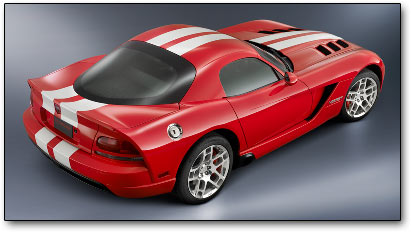
The invoice price on the 2009 Viper SRT10 Coupe was $82,989 for the base car, which had an MSRP of $89,340; Customer Preferred Package 21B added $12,060 (MSRP $13,550). The gas guzzler tax adds $1,751 to the cost but Chrysler charges owners a rounded-down $1,700. The destination charge of $930 is the same for the dealer and the buyer.
SRT powertrain engineers had to increase performance while complying with new regulatory requirements. Working with specialists from McLaren Performance Technologies and Ricardo, Inc., SRT engineers began by following the racer’s basic formula for more power: bigger displacement, more efficient breathing and higher engine speed.
The new Dodge Viper SRT10’s deep-skirted V-10 aluminum engine block was bored out 1 mm, raising the displacement to 8.4 liters from 8.3 liters. With strengthened bulkheads and improved water jackets for better cooling, the block includes pressed-in iron cylinder liners and cross-bolted main bearing caps for strength and durability.
Horsepower didn’t come only from the engine, the use of a plastic hood allowed engineers to increase the airflow through the hood scoop; openings along each side are not just for show, but to circulate air within the engine compartment, to keep power going with a warm engine. It also lowered weight and helped keep the Viper costs down. Other body panels are also plastic, and carbon fiber is used for some structural parts to keep weight down.
The Viper SRT10’s 8.4-liter engine had heads with Computer Numerically Controlled (CNC)-shaped combustion chambers, larger valves and Variable Valve Timing (VVT). VVT electronically adjusts when the exhaust valves are open and closed according to engine speed and load, allowing the engine to “breathe” cleaner and more efficiently.
Platinum-tip spark plugs were fired by individual plug coils mounted on the cylinder-head covers. The pistons themselves had larger-diameter floating pins with bronze bushings for higher loads. Forged powder-metal connecting rods were secured with aircraft-quality fasteners for increased fatigue strength.
Engine lubrication was managed by a larger oil pump and a swinging oil pickup adapted from Viper competition engines, to improve oil pressure in high-rpm and hard-cornering conditions.
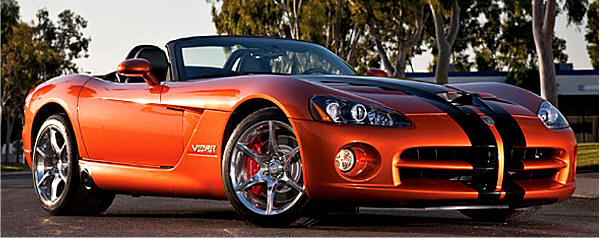
Dodge officially unveiled the new 2010 Viper at the L.A. Auto Show—showing two new exterior colors—Toxic Orange Pearl Coat and Bright Silver Metallic Clear Coat—with a wider dual racing stripe pattern. Also new for 2010 is a revised fifth gear ratio—.80:1 instead of .75:1—for all Vipers, to dramatically improve high-speed acceleration. A standard Viper will reach 200 mph 14 seconds faster with the new gear. The idea came from SRT’s experiences at the Nürburgring, when Viper set the production car lap record. It was thought that the ACR would be even quicker with the new gear. Will we see a new expedition to the famous track in the near future?
The 2010 ACR and the ACR-X will have new slotted wing endplates to go with a revised wing profile to give more downforce in yaw. This means the 2010 ACR will be even quicker in corners, which would have been a factor at Laguna Seca a week earlier. ACRs also get a short-throw shifter and the new fifth gear.
To celebrate the new lap record at Laguna Seca, Ralph Gilles announced a Viper special edition ACR, to be built in the same special red and black livery as the record car. The paint scheme is the reverse of the one that was on the Nürburgring record-setter. The new edition’s name: “1:33,” to commemorate the record of the same number. Thirty-three (33) will be produced.
Lurking in the pits at Laguna Seca the previous week, and featured in the Chrysler booth, was Ralph Gilles’ black ACR with its new graphite-color driver stripe enhanced by red outlines. This menacing color combination is the hallmark of another new edition named “Vooodoo,” offered for this 2010 model year. Dodge will produce only twenty of these darkly beautiful monsters.
An improved gearbox, a better ACR aero configuration and gearshift, striking new colors, two exciting new special editions and two new track racers introduced at PRI—Viper is poised to have a great year in 2010 with even more goodies rumored to be in the pipeline as Dodge and SRT finish a legendary run and gear up for 2013.
2010 ACR
Numerous special, limited-edition models are planned for the 2010 model year, including the Vooodoo-edition Viper ACR will feature an all Black Clear Coat exterior with a Graphite Driver’s Stripe outlined in red. Only 20 cars will be produced with the unique striping on both the exterior, as well as on the steering wheel. Additional special edition models will be announced closer to their individual introductions. Pricing on the 2010 Dodge Viper lineup also will be announced at a later date. Visit your local Dodge Viper dealer to inquire about this amazing Viper!
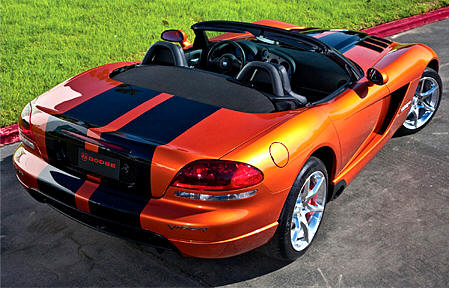
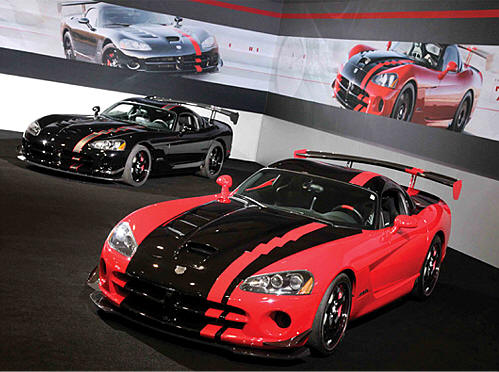
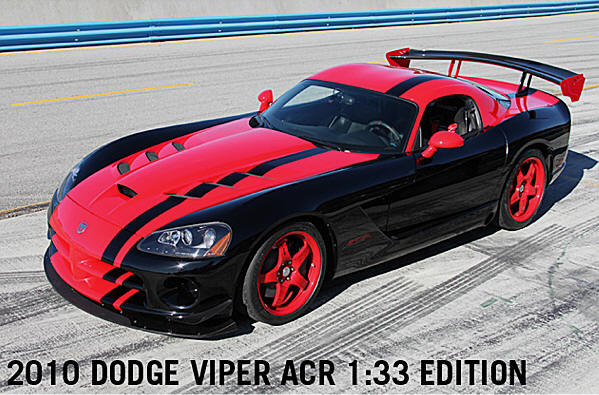
Numerous special, limited-edition models are planned for the 2010 model year, including the Dodge Viper ACR 1:33 Edition, which will pay tribute to the new production car lap record set on Nov. 24 at Laguna Seca raceway. The unique two-tone Black Clear Coat/Red Clear Coat exterior color scheme on this model is the opposite form of the original Viper ACR. Interior highlights include piano black console bezels with red gauge highlights complemented with red accent stitching in the seats. Only 33 cars will be produced as 1:33 Edition Viper ACR models. Additional special edition models will be announced closer to their individual introductions. Pricing on the 2010 Dodge Viper lineup also will be announced at a later date. Visit your local Dodge Viper dealer to inquire about this amazing Viper!
Viper Club of America member D’Ann Rauh of Arp, Texas, was the buyer of the final 2010 Dodge Viper. D’Ann worked with Dodge to select personal touches, including custom bronzed gold exterior paint supplied by House of Kolor. The custom interior has leather appointments crafted by Tony Spampinito from Venzano, who has worked with D’Ann and her husband on previous Viper projects; they have the largest personal collection of Vipers in the world, with 40 of the Dodge cars.
Dodge Viper SRT-10 2003-2006
| Pictures by model year: | |
| 2003 | SRT-10 Convertible |
| 2004 | SRT-10 Convertible |
| 2005 | SRT-10 Convertible |
| 2006 | SRT-10 Convertible & SRT-10 Coupe |


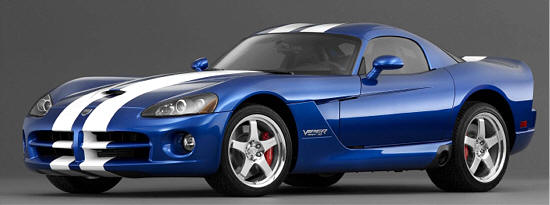
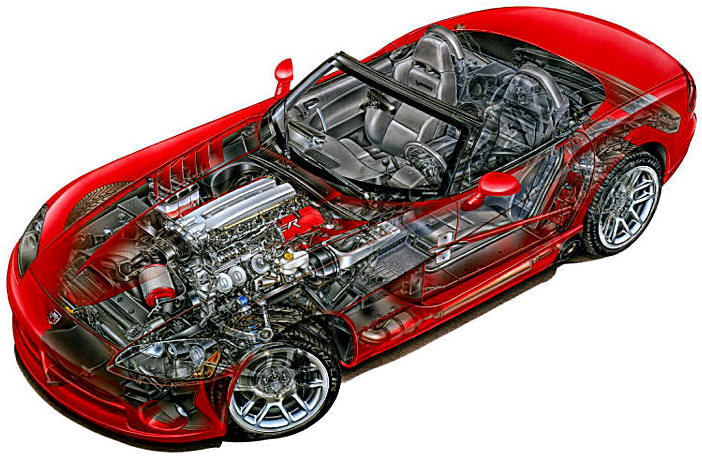
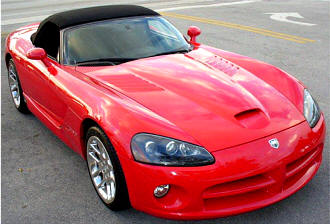
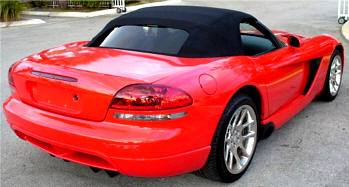
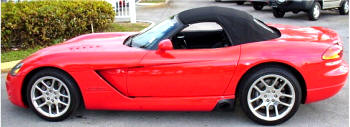
The Dodge Viper underwent a major redesign in 2003, courtesy of DaimlerChrysler’s Street and Racing Technology group. The new Viper SRT-10 was heavily restyled with sharp, angled bodywork. The engine was enlarged to 8.3 L (505 cid/8,285 cc) which, with other upgrades, combined to increased output to 500 hp (370 kW) (373 kW) and 525 ft·lbf (712 N·m) of torque. The chassis was also improved. It became more rigid and weighed approximately 80 pounds less than the previous model. The initial model was a convertible. In 2004, Dodge introduced a limited edition Mamba package. Mamba edition cars featured black interiors, with red stitching and trim and saw their MSRP price rise by roughly $3000. 200 Mambas were produced.
The new Viper SRT-10 Coupe was introduced in 2005, at the Detroit Auto Show, as a 2006 model. It shares many of its body panels with the convertible but takes its side and rear styling cues from the Competition Coupe. The new coupe looks much like the previous Viper GTS and retains the “double-bubble” roof shape of the original, along with the original GTS’s taillights as well offering the original Viper Blue paint scheme with white stripes (referred to as GTS Blue) for an added homage to the original Viper coupe. The engine was also certified by the SAE to produce 510 hp (380 kW) and 535 ft·lbf (725 N·m) of torque. It is important to note that the engine makes the same power as before, only the numerical value of the power was changed. Unlike the original coupe, the chassis was not modified. This made the new coupe heavier than the convertible, and thus slightly slower in low speed acceleration. Handling and high speed performance were improved by the coupe’s stiffer frame, reduced drag, and increased down-force.
No 2007 model Vipers were produced. Instead, Chrysler chose to give the 2006 model an extended run while preparing the updated 2008 model.
2003
The 2003 Dodge Viper SRT-10 brought about a change in the already legendary muscle car, a change that seems almost universally to be for the better. First thing’s first. The 2003 Dodge Viper has an 8.3-liter engine, .3 liters bigger than previous years, which has a maximum horsepower output of 500. Another major, and much appreciated, change in the 2003
Dodge Viper SRT-10 is the convertible roof. This one is actually easy to operate!
All in all, over 100 changes were made by Dodge engineers in the redesigned 2003 Dodge Viper. Inside, the Viper is much more comfortable. The seats were redesigned, a dead pedal was brought in as a place to rest your left foot, and a 6-CD changer was included so you don’t have to waste valuable time looking through your case mid-journey. The gas mileage is still around 12/24 mpg city/highway, but that’s become fairly standard for the Viper family.
Owners of the 2003 Dodge Viper SRT-10 seem to think that it is the best Viper made up to that year. For the most part, owners are happy with all of the changes, especially the 50 extra horsepower and the convenient convertible roof. Despite being redesigned, the 2003 Dodge Viper still keeps its position as one of the best muscle cars on the market.

Our favorite Viper ad by Dodge circa 2003
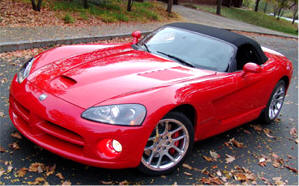
2004
The year after the redesign, the 2004 Dodge Viper SRT-10 Roadster didn’t make any significant changes on its predecessor, not because of laziness on Dodge’s part, but because the 2003 was so superb. The 8.3-liter V10 in the 2004 Dodge Viper puts 500 horsepower under the control of the driver. A 6 speed manual transmission, anti-lock brakes, and a limited-slip differential all help the driver keep that power under control.
The convertible top of the 2004 Dodge Viper SRT-10 Roadster is far easier to use than previous tops have been, making the experience of owning a convertible a lot more fun. A dead pedal gives the driver’s left foot something to do when not shifting, and the 6-CD changer keeps passenger and driver entertained for 6 times as long. Overall, the total interior comfort of the 2004 Dodge Viper SRT-10 is not bad at all, and stops short of being frivolous or pampering.
Owners of the 2004 Dodge Viper don’t focus on much beyond the raw power and acceleration of the muscle car. And with a 0-60 mph of under 4 seconds and a top speed of over 190 mph, it’s no wonder. The only consistent complaint made by owners is that the heat from the engine gets brought into the passenger compartment, making everyone uncomfortable. But 500 horses give off a lot of heat, so that’s only to be expected. All in all, owners are crazy about this car: the way it drives, the way it sounds, and the way it turns heads everywhere it goes.
2005
The 2005 Dodge Viper SRT Roadster is a monster on the road, and completely worthy of its namesake. Speed, power, and aggressive beauty come together primally in the 2005 Dodge Viper for the ultimate driving experience. The 8.3-liter V10 harnesses the power of 500 horses, allowing for a 0-60 mph of under 4 seconds, and a top speed above 190 mph. The 2005 Dodge Viper SRT-10 was built for nothing but fun.
With all that power, the 2005 Dodge Viper SRT-10 isn’t completely bare in the comfort department. Air conditioning, power windows, power seats, adjustable pedals, and a 6-CD changer keep passenger and driver (only one of each allowed) happy. Not that they wouldn’t be, going any speed they want in a convertible with a top that is easy to operate. But Dodge also didn’t go overboard with the 2005 Dodge Viper. Nothing frivolous like cup-holders or cruise control clutter up the interior of the 2005 SRT-10.
Owners of the 2005 Dodge Viper SRT-10 Roadster have one major request for Dodge: more power. As if 500 hp wasn’t enough. There is also a slight problem of the engine causing the passenger compartment to heat up a bit, but owners seem to overlook that single flaw in the grand scheme of going faster and looking better than they can in just about any other production car on the market
2006
2006 gave the Dodge Viper SRT-10 Roadster Convertible a brother: the 2006 Dodge Viper SRT-10 Coupe. This new hardtop model rounded out the new generation of Vipers nicely. Other than the top, very little is different between the 2006 Dodge Viper Roadster and the Coupe. Both have answered the continual call from Viper owners for more power from the V10. The 8.3-liter engine now churns out 510 hp. Is there no limit to the amount of horsepower Dodge can cram into the Viper?
The 2006 Dodge Viper SRT-10s were not built for comfort, but engineers kept it in mind and did think to include air conditioning, power windows and locks, and a 6-CD changer, all of which were missing in some early models of the Viper. The bucket seats in the 2006 Dodge Viper seem to be more comfortable than the first generation seats, meaning you can comfortably drive farther, if you can afford the 12/20 mpg that the 2006 Dodge Viper gets. But no matter where you go, whether in the SRT-10 convertible or the coupe, you’re bound to catch a lot of stares.
Or so say the owners of the 2006 Dodge Viper SRT-10s. Not that its any surprise, not with the reputation the Viper has gained, or its unique shape and sound. The 2006 Dodge Viper SRT-10 is not a car for a timid or mediocre driver, but if you can handle the power, few cars can match the fun of the Viper.
2007
Dodge skips this year with the Viper to focus on the 2008 redesign.
ENGINE: 8.3-LITER, OHV, 20-VALVE SMPI V-10
- 10-cylinder 90-degree V-type, liquid-cooled
- 505 cubic inches (8277 cc)
- 356-T6 aluminum alloy block with cast-iron liners, aluminum alloy cylinder heads
- Bore x Stroke 4.03 inches x 3.96 inches (102.4 x 100.6)
- 20 pushrod-actuated overhead valves
- Roller-type hydraulic lifters
- Sequential, multi-port electronic fuel injection with individual runners
- Compression Ratio 9.6:1
- 500 bhp (372 kW) @ 5600 rpm (60.4 bhp/liter)
- Torque (SAE net) 525 lb.-ft. (712 Nm) @ 4200 rpm
- Max Engine Speed 6000 rpm
- Fuel: Unleaded premium, 93 octane (R+M/2)
- Oil Capacity (with filter) 10.5 qt. (9.9 L), Mobil 1 10W30 Synthetic
- Coolant Capacity 16 qt. (15.9 L)
- Emission Controls: Four three-way catalytic converters, heated oxygen sensors, engine internal features
- Exhaust System: Stainless steel tubular headers, side exit exhaust
- 136-amp high-speed alternator with 600 CCA battery
- In dash AM/FM/CD Radio with internal six-disc changer with 310-watt RMS audio amplifier and seven speakers
TRANSMISSION: MANUAL, SIX-SPEED OVERDRIVE
Synchronized in all gears, electronic 1-4 skip-shift and reverse lockout mechanisms
Gear Ratios
- 1st Gear: 2.66
- 2nd Gear: 1.78
- 3rd Gear: 1.30
- 4th Gear: 1.00
- 5th Gear: 0.74
- 6th Gear: 0.50
- Effective Final Drive: 3.07
- Overall Top Gear: 1.54
FINAL DRIVE: Frame-mounted hypoid bevel gear with clutch-type limited-slip differential
TRANSMISSION: MANUAL, SIX-SPEED OVERDRIVE
- Overall Length: 175.6 in (4459 mm)
- Overall Width at Sills: 75.2 in (1911 mm)
- Overall Width at Mirrors: 78.5 in (1944 mm)
- Overall Height: 47.6 in (1210 mm)
- Wheelbase: 98.8 in (2510 mm)
- Curb Weight (est.): 3380 lbs (1536 kg)
- Track Front: 57.8 in (1469 mm)
- Track Rear: 60.9 in (1547 mm)
- Weight Distribution (F/R): 48/52
- Ground Clearance: 5.125 in (130 mm)
- Frontal Area: 19.3 sq. ft. (1.79 sq. m)
- Drag Coefficient: 0.43 (top down), 0.40 (top up)
- Fuel Tank Capacity: 18.5 gal. (70 L)
- Trunk Capacity: 8.4 cu. ft. (239.7 L)
ACCOMMODATIONS
- Seating Capacity: 2
- Head Room: 36.5 in (926 mm)
- Leg Room: 42.4 in (1077 mm)
- Shoulder Room: 54.1 in (1375 mm)
- Seat Travel: 7.6 in (192 mm)
- Recliner Range: 45°
- SAE Interior Volume: N/A
BODY/CHASSIS
Layout Longitudinal front engine, rear-wheel drive
Chassis Construction Backbone tubular steel space frame with separate cowl structure
Body Construction Sheet-molded composite (SMC) and resin injection molded (RIM) body panels, aluminum sills, RIM front and rear fascias with injection-molded impact beams
Aerodynamics Wind-tunnel tuned body and top, partial belly pan
SUSPENSION
Front Cast-aluminum unequal-length upper and lower”A” arms, coil springs, high-pressure gas-charged rebound-adjustable shock absorbers, stabilizer bar, six-lug hubs
Rear Cast-aluminum unequal-length upper and lower “A” arms toe-control links, coil springs, high-pressure gas-charged rebound adjustable shock absorbers, stabilizer bar, six-lug hubs
STEERING
- Type: Power-assisted rack and pinion
- Overall Ratio: 16.7:1
- Turning Diameter: 40.5 ft. (12.34 m) (curb-to-curb)
- Steering Turns: 2.4 (lock-to-lock)
TIRES
- Michelin Pilot Sport ZP with low-pressure sensors in valve stems
- Front: P275/35ZR18
- Rear: P345/30ZR19
WHEELS
- Type and Material: Polished forged aluminum
- Front: 18×10
- Rear: 19×13
BRAKES
- Front: 14.0×1.26 in (355×32 mm) vented cast-iron disc, four-piston/two-pad fixed caliper with advanced ABS. Black anodized caliper finish with Viper logo
- Rear: 14.0×1.26 in (355×32 mm) vented cast-iron disc, four-piston/two-pad fixed caliper with advanced ABS. Black anodized caliper finish with Viper logo. Single-piston sliding-caliper parking brake
- Power-Assist Type: Tandem diaphragm vacuum
2006 Dodge Viper SRT-10: Quick Full-Throttle Test Drive
Copyright © 2006 Curtis Redgap, special to Allpar.
Around the country, November 18 and 19, DCX hosted a Ride, Drive and Win event entitled “Full Throttle” in Orlando, complete with a Crossfire SRT-6 giveaway. The underwhelming response was a surprise and a revelation; for ten days prior to the weekend, full page ads were run in the Orlando Sentinel, which reaches over a million people. The weather was stunningly perfect. A cool snap had come in the day before which lead to low humidity, crisp, clear air, and delightful bright blue sky, the sort of weather that makes you glad to be in Florida. By 9 am, the temperature was already up to 67°. There was a breeze blowing, Nature’s air conditioning system working well.
The Orange County Convention Center parking area, where the driving road courses were set up, is a huge facility. The paved parking area is immense, but I was absolutely alone. There was no traffic whatsoever. As I followed the signs to the parking area, I was stunned by the lack of other vehicles there. There were maybe about 75 cars in this huge parking lot set aside for the Full Throttle event. At the registration area, I was the only person in line.
The main component of the registration is to allow the local authorities and DCX security to check your license, to make sure that your driving record doesn’t scare the DCX folks. You also get a couple chances to win the Crossfire, and you are given cards with SRT on them so you can get a shot at driving one of the hot SRT models on the road courses.
Turning around, I was faced with the most beautiful blue Dodge Viper Convertible that you can imagine. It was gorgeous. I wanted a shot of getting to drive one of those! I was still marveling at the total lack of participation by the general public. It was all totally free, with plenty of food, coffee, soft drinks, bagels, doughnuts, pastries, and more, all spread out for anyone to help themselves, prepared by Panera Bread, and fully paid for by DCX.
I made a quick tour of the layout. Three different driving courses that had about the same distances, curves, cutbacks, and acceleration lanes. There was a hard braking area as well, if you chose to get full throttle. A course was set out by itself for the SRT-10 Dodge pickup and the Viper.
Duly noted were models that were NOT there. Missing in action completely were the PT Cruiser, Dodge Dakota, and Dodge Caliber. Not a single one on site, not even in the customer parking area! Off the duty roster included the Dodge Caravan, though several were used by the staff; and the Chrysler Town and Country. One model on display which was a 2006 from a local dealer, and it was the LX model which had a few options, but not impressive, and not available for testing.
I also want to make a note to Dodge. I expected to see a couple of police packages there. Maybe not for testing by the general public, but hey, what more attention getting devices could you have than a full blown police pack with lights flashing, siren screaming and that Hemi V-8 roaring around the test driving courses? Nowhere. Not even mentioned. But take a look at what was there:
As can be expected, the security was provided by the Orange County Sheriff, which has about 1,100 patrol units. They were all over the place. They frequently watched the proceedings going on at the test tracks. As an aside, as Orange County goes, so does the rest of Central Florida. The Impala is going in on all the surrounding Sheriff departments and local police departments at a good price — $20,000 or so including setup, decal installation, radio, and lights. Drive them away. Hard to beat that, so there are no Dodge pursuits around here.
Now on to getting to drive the Viper! It wasn’t easy. Apparently, at an earlier event, someone got in a Viper and drove it away! Yes, the person was caught a few blocks away. However, you can imagine the consternation of the program directors. The cars at the events for the most part were not even registered or licensed. Due to this dope stealing a Viper, the show directors decided that since the Orlando event was the last one of the year, the Viper would not be available for test drives.
But all was not lost, at least not yet. The lack of people at the event meant that the guys in charge were readily accessible. I made my approach. An explanation of what I was doing there, and that I wrote for a enthusiast site called allpar.com with about 40,000 or so participants [editor’s note: that’s the forum registration; and Curtis was already registered with Chrysler as a staff writer] got some attention. My request to drive a Viper, even in a out of the way part of the parking lot, had not been refused. As I said to them, just for tactile input, and a general feel of the car. I was partially rewarded in not receiving a lot of laughs. Some consultations were held. Finally, the person in charge told me that he would have to check with his supervisor, and I should check back with him later. In the meantime, he gave me extra SRT cards for extra drives in the SRT models.
Around 2 pm, as I was testing the ordinary models, a roar and a commotion went out in the Viper paddock. The SRT-10 Dodge pickup and the Viper were on the loose, putting on, and I still don’t get this……. a drifting demo.
This doesn’t represent all the maneuvers that the drivers put the vehicles through, but it does sort of give you an idea what was going on. Those are 345/30Z R19 98Y tires.
A full garage was brought along by tractor-trailer. Tire changes were constant. With the Michelins costing about $420 apiece, retail. They had a few sets out back. Yes, that black Viper is what I had my eyes set on to drive.
My cell phone rang. It was the production director. He could not reach his supervisor, but would speak with him in the evening.
Sunday morning dawned clear and somewhat cool. The sun shone brightly. The production manager gave me a start when he told me to come on over and talk to him. He had some good news. I was thrown into a rush. I actually was going to get to test drive a Viper!
Imagine my surprise when the event manager said that he had checked out allpar.com and was impressed. I was too, not by allpar, because I already knew, but by the fact that he had taken the time to check it out. Based upon the large number of people that are registered in the forums, he agreed to let me “ride” in the Viper.
I met my driver for the occasion, who just happened to be a cousin of a highly respected family that is well involved with racing. I didn’t press him as to why he wasn’t out there raging around on a track somewhere. The family resemblance however was clearly unmistakable.
Before I even got near the car itself, my driver commanded my full attention. He was firm in admonishing me to be extremely careful in entering and exiting the Viper. The reason is shown below:
Take note of the large “hole” in the side rails, just ahead of the rear wheel openings. Those are the tips of the engine exhaust outlets. Since its inception, Viper has been equipped this way in that the engine exhaust pipes run inside the doorsills. Imagine, they used to be exposed. I was told in no uncertain terms that it would “fry your skin quicker than a chicken leg at KFC!” With his voice garnering my attention, he added that, “you may forget once, but it is a sure thing you would never forget again!” I asked him if he spoke from experience and he acknowledged that just about everyone that drives or owns a Viper gets a mark of distinction. Lead to a few disagreements with friends, and a break up or two with the significant other.
As I came closer to the driver side door, I could actually still see the heat waves slowly rolling off the tip. It was also then that I had a sort of revelation. This looks like a big car at first. It is not. The wheelbase is 98.8 inches. That is 8.2 feet between the center of the wheels. As I stood with the ignition key in my hand, I noted that my host (escort-bodyguard-driver police) was looking at me quizzically.
Taking a deep breath, and being extremely conscious of the hot door sill, I swung my leg in. Tell you one thing, you better be pretty supple. It sort of woke we up all right. By using my hand on the side of the steering wheel, I slowly pulled the rest of me inside. I sort of fell inside, and had to pull my leg with my hand to get the rest of me in. Once that was accomplished, another tough realization hit me. This cockpit is tight! Further, when I tried to move around a little to kind of orient myself, the seat bolster held me firmly in place. That may not be a bad thing, but it didn’t lend itself to maximizing what I thought might be an ideal driving position for myself. And you got to be careful moving around because the top is like almost touching your head. I was stunned at the closeness feeling confined once I was inside. I am not a real fan of enclosed spaces, and a momentary pang of loss of freedom came over me as I checked around in the Viper Command Seat. The view outside is constricted as well. The big convertible roof panels shut off looks to the right, so the mirror on the right side becomes very critical. Forget trying to see out the rear. You might be able to see someone who has taken up a “tail gator” position. The top doesn’t give you much view through the inside rear view mirror. Too narrow.
But, well all right, I am in a Viper! Sitting in the seat like I knew what I was going to do. While I was scoping out the instruments, pedal location, and the six speed gear shift, I noted that the Viper was very warm inside. The temperature was a nice 72° outside, almost too cool for Florida.
This is the view of what I was looking at. These shots are from the Viper that was inside with the top down. My little camera would not focus inside the Viper I was getting ready to drive. Not enough light and too close to refocus.
This is when you realize you are but a couple steps from unleashing one of the most powerful cars built in America. A 510 horsepower aluminum engine with 8.3 litres of displacement, (505.6 cubic inches) laid out in a V-10 with a 90° block. With that rush, forget about feeling closed in, or what the temperature is as long as you aren’t melting. What makes this go so well is the 535 foot pounds of twist that is hooked to a 6 speed Tremec transmission. You have gotten a look at the rear tires. The 19 inchers look like treaded beer kegs under there. They are in turn mounted to a rear axle with a 3.07 ratio in a differential that transmits power equally to both rear wheels when it detects one side attempting to outrun the other. Taking all that power into consideration, the brakes were far from forgotten. In fact, they are massive 14 inch vented discs all around that operate through an upgraded ABS system. The suspension system on the front , which mounts 18 inch tires, consists of control arms, with coil springs, and anti roll bars. The rear is kept in under the car with control arms, coil springs and anti roll bar. Fully decked out, like this one, the Viper checks in with about 3500 pounds of gravity holding it on the ground. Listed price on this one? Only $86,995.
So, now I look up at my “host”. He nods his head. I slip the key into the ignition lock and twist it. OK, nothing is going to happen, because this jobbie has a big red “start” button. That is located directly under the 4 gauge dash panel to my right. Like time has slowed down, I reach over and press the big red button. It immediately blasts the big V-10 into an idle. My second seat buddy reaches over and cranks up the air conditioning. I glance at him, and he informs me that the V-10 is a massive heat producer. He assured me that I would begin to notice pretty quickly. I am surprised that it is quiet while it sits in an idle. I am also surprised at the clutch pedal. Granted, I haven’t driven a stick shift in quite awhile. The Viper clutch pedal is much lighter than I expected, almost oily feeling. I snick the gear shift a few times, gauging out the gates. The travel is short, the feeling is positive, lending confidence to competent gear changes.
I slip the stick into “first” and glance at my “guide.” I am limited to a max run up of 3,000 rpm, carefully watched by my guard friend, who has promised he’d yank out the key if I went too far. Just live with it and let’s do this.
I began the clutch take up slowly, trying to get a feel for the car. The tachometer came up to about 1,200 rpm from idle at 700, when all of a sudden, we were launched. Easy. In fact, a lot easier than I anticipated. I had thought that I would either stall it or send the rear tires up in clouds of rubber smoke when I broke traction. But, I didn’t, surprising myself. I blipped the throttle, and the engine went a little past 3,000 rpm; my “watch” person seemed or pretended not to notice. A slick move of the shifter into second, along with another quick throttle blip and we were moving out. I had been confined to the property of the Orange County Convention Center Parking Lots. There are many, for the place is huge. But, with the Viper, I felt like I was on a kiddy car track. Slipping into third gear brought the end of one side of the lot, all too quickly. The big brakes snubbed off the speed like it was nothing. Well, I suppose, it was, considering.
The instrument panel is laid out very well. Within a few minutes, you seem to be able to orient yourself to the vital reports that the fully functioning engine gauges are telling you. All the switchgear felt positive, and not like they were made somewhere else and imported to the Viper. The radio controls were familiar to me because I have the same system in my Chrysler. However, you have to take your eyes off the road when you are locating stations, or changing CDs. The switch gear not only looks all the same, it feels the same, and for me, is a tad too small for my fumbly big finders.
My “partner” was right. The heat generated by the V-10 is massive. You can feel it coming through the door sills from the exhaust. The firewall also tosses out a lot of heat, that you feel that in your legs. As well, the center console becomes a heat conduit, making your arm uncomfortable instead of being a nice spot to rest it. You definitely need and will absolutely appreciate the air conditioning.
I pulled up to a stop, and turned the Viper to go into another direction, when I noticed something else that felt a touch odd. The steering wheel is offset to my right! It doesn’t line up straight. Once I noticed it, it did tend to bother me. I began to try to compensate through the use of the right hand more than the left. Silly, I know, but you have to wonder why this would be so in a high zoot car like this. The only other car I ever knew that was set up that way was the throwaway Chevrolet Chevette, GM’s answer to Ford’s Falcon in competing for throw away cars of the century.
This side of the parking area was much longer. Perhaps as much as a mile or better. I slipped up to my 3,000 (well, maybe a little….. bit higher) through 4 gears. By then, it was time to haul the Viper back to stop. I did note that the ride was hard. Small tar strips across the drive transmitted quite definitely into the suspension, which I could feel. I had no way to really tell, but I couldn’t help wondering if I would be willing to use the Viper on a daily commute to anywhere. Given some of the concrete roads, even around here that 18 wheeled traffic has beaten down, the ride can be plenty rough.
Since this was an unplanned outing, I had no way to tell what sort of acceleration this sling shot might be capable of, however, through the seat of your pants, you know, that it is straining to go. Just a jab of the pedal away. Even my short pokes on the go pedal resulted in instantaneous response, shooting forward like a shot. The torque delivery is smooth, and linear, with no sudden surprises. Just sheer pure power all totally under the control of your right foot. Much easier to keep in check than I had figured it would be.
My guardian declared that it was time for the show. Yes, I do get to ride in the drifting exhibition, with my partner at the helm. That was part of the agreement I signed, when I waived my right to go on living for a shot at the Viper. Now, there is the situation on extracting yourself from this box. I had to step out to prevent leg fricassee, then pull my head forward, and twist so that I could get my arm onto the top of the car, to enable myself to get free. I wouldn’t enjoy that very much every time I drove the car. And it was far from graceful, believe me. On the way around for the switch, I opened the trunk. Wow. Not much room there. I can’t imagine some of the guys that I know choosing the Viper to go out on the town with. The boot end wouldn’t hold their golf clubs and cases of beer going away. You might be able to haul enough to make it for two for a couple days over a weekend if you make certain that the luggage is small.
Being a young guy, my driver slips in and out of the Viper with ease. Why not? It is in my opinion a younger person’s car. It is good that Dodge builds such a monster, however, I would like to see something a little more refined. I mean, hey, an anvil is an anvil! Given the development that has been had for the Viper, the original intent is very much still in the genes. The price of admission no doubt keeps a lot of kids from ever being able to afford a Viper.
Now, he slips in behind the wheel, and I struggle to insert myself into the passenger seat. I click the seat belt into place, and before I can look to straighten myself up, I am slammed back into the seat! The engine screams with a loud belly roar, and the Viper is blasting across the parking lot. I can’t get a sense of how fast, because I can’t get my head up! No kidding! The punch from that V-10 at full blast generates so much force, that you are just pinned!
I am gonna tell ya, I have ridden or driven a whole lot of very powerful cars. A couple of early model 300s. A 1962 Super Stock Plymouth 413 that my brother ended up racing. A 1964 426 Hemi that my brother had for racing. Some pretty darn hot police packages with the 440 V-8s. And a couple of street ready 426 Hemi V-8s that were docile enough for the wives to operate getting groceries from the store but would rip off stupendous acceleration. Yes, these cars were fast.
One of the greatest automotive writers was a gentleman named Tom McCahill. He began his car testing for Mechanix Illustrated by sneaking off with a 1948 Ford Tudor and wringing it out. He coined the phrase “beautiful brute” when he went all eloquent over some of the original Chrysler 300s that he tested. He went on to say of the later models that they were like “steel fists inside velvet gloves, looking all fine, but with a knock out punch when called on.” With all due respect to him, and not to re-coin a phrase lightly, let me say that the Viper is just a brute. A steel fist that is not in any sort of glove, and doesn’t apologize for it either!
In my entire experience, I have never, ever, felt a car accelerate so hard! It was just like being in an airplane that had suddenly gone to full take off thrust by a half. I never saw it coming, and it is just an experience that cannot be appreciated unless you go and get in one of these torque delivery monsters for yourself. Let me say this. At no time did I feel unsafe or uncomfortable. Not even a single little bit. The Viper was tough, competent, and straight. My driver tossed it around, spun it out, slammed through the gears, flipped it back and forth across the track, slammed on the brakes, downshifted like crazy, accelerated with his foot stuck right on the floor, and never at any time did he make me feel like he should do anything less. In fact, the sensation was better than riding on the Hulk roller coaster at Universal Orlando Resort! And I rode that thing many a time.
The Viper has its place among vehicles. Really, it is not something that I would choose to be a daily commuter. Although, for weekend outings, and just blasting around, I would not fail to have one, and hey, maybe two or three of them! Just be cautioned that these are tough brutish types of cars. They aren’t meant to be Sunday go to Church meeting rides. Blast by the Church, yes!
No doubt there are more sophisticated, perhaps less expensive, more comfortable, cars in this class. But a Viper is a Viper, and there isn’t anything else that can come close. A vehicle built in a class by itself.
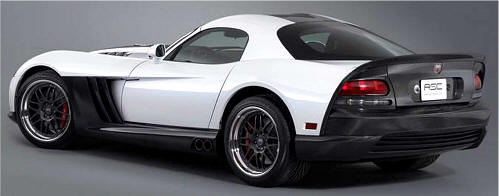
ASC Diamondback Viper powered by McLaren picture
A “snake” with an all-new skin—and ultimate display of the production merits of ASC’s patent-pending OmniCarbon™ process–the Diamondback Viper is super-light and super-fast. It’s fitting that ASC, which helped the Chrysler Group bring the new Dodge Viper SRT10 coupe to life, would, with the aid of McLaren Performance Technologies, show how the Viper coupe might be taken to an all-new level of “extreme.”
The 615hp Diamondback Viper features a carbon fiber roof, deck lid, rockers, fascia inserts, body trim and a massive OmniCarbon™ hood that shows off ten unique trumpeted air intakes, with individual port throttles, peeking through—a McLaren Performance Technologies feature reminiscent of McLaren Can-Am engines of the past.
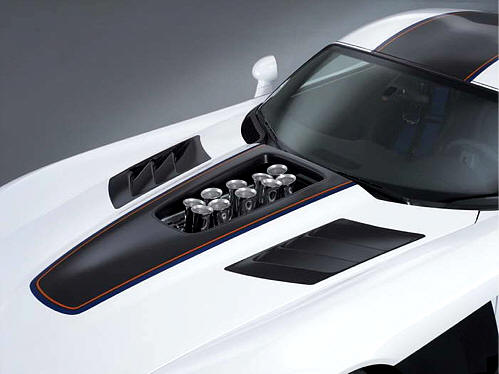
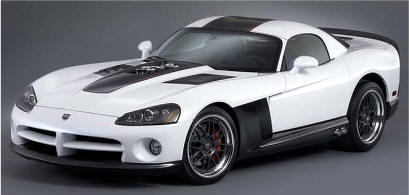
The hood also shows off ASC’s expertise in compression-molded carbon fiber, both painted and woven. It’s displayed beautifully, with a broad, clearcoated racing stripe down the Artic White-painted expanse, subtly outlined by “Viper Blue” and “McLaren Red” pinstripes. In all, ASC removed about 85 lbs. of weight from the vehicle—including cutting the weight of the hood by nearly half versus the production model.
Taken together with the powertrain modifications by McLaren Performance Technologies, the power-to-weight ratio was increased, resulting in an estimated increase in 0-60 mph time of 3.5 seconds.
And, importantly, ASC’s OmniCarbon™ isn’t just light and nice to look at: ASC has reduced cycle times in the process by 80 percent versus conventional molding methods, and is confident its process meets OEM production specifications.
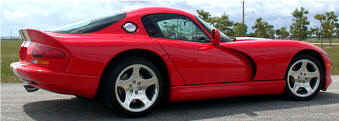
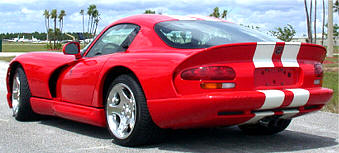
Dodge Viper Gen 2 1996-2002
Dodge Viper RT-10 Convertible 1997-2002 * Dodge Viper GTS Coupe 1996-2002
| Pictures by model year: | |
| 1996 | GTS Coupe |
| 1997 | RT-10 Convertible & GTS Coupe |
| 1998 | RT-10 Convertible & GTS Coupe |
| 1999 | RT-10 Convertible & GTS Coupe |
| 2000 | RT-10 Convertible & GTS Coupe |
| 2001 | RT-10 Convertible & GTS Coupe |
| 2002 | RT-10 Convertible & GTS Coupe |
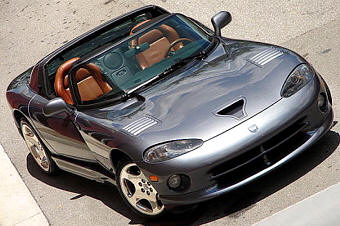
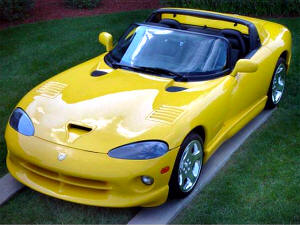
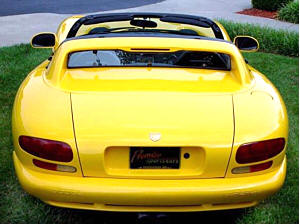
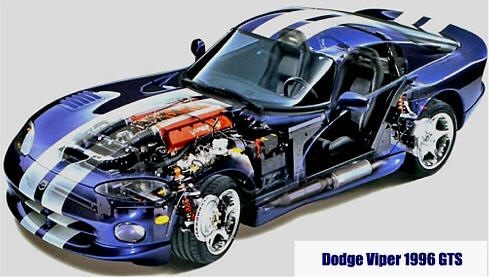
Performance (GTS):
- 0–60 mph: 4.0 sec
- 0–100 mph: 8.6 sec
- Quarter Mile: 12.2 sec @ 118 mph (190 km/h)
- Top Speed: 190+ mph (306 km/h) (proven by Road & Track magazine)
- Slalom: 71.3 mph (115 km/h)
- Skidpad Average G: 0.98
| Production | 1996–2002 |
|---|---|
| Body style(s) | 2-door roadster, 2-door coupe |
| Engine(s) | 8.0 L V10, 450 hp (336 kW) |
| Transmission(s) | 6-speed manual |
| Wheelbase | 96.2 in (2443 mm) |
| Length | 175.1 in (4448 mm) (1996–99 RT/10) 176.4 in (4481 mm) (2000–02 RT/10) 176.7 in (4488 mm) (GTS) |
| Width | 75.7 in (1923 mm) |
| Height | 44 in (1118 mm) (RT/10) 47 in (1194 mm) (GTS) |
1996 Year of the Dodge Viper GT Coupe
The 1996 Dodge Viper brought forth some major changes in this muscle car institution since its inception in 1992. First and foremost, the once solitary beast has split into two models: the standard RT/10 roadster and now the GTS coupe. Both 1996 Dodge Vipers seem to have found some more of that power that owners seemed greedy for from the 8.0-liter, V10 engine. The roadster has a maximum output of 415 hp, but the GTS manages to get a whooping 450 hp from the standard engine.
The GTS was even released with some new features, above and beyond the optional air conditioning that came in earlier models of the Viper. AC comes standard in the 1996 Dodge Viper GTS, as do power windows, power door locks and air bags. Dodge also thought of the taller and shorter drivers with the 1996 Viper GTS, and put in adjustable foot pedals. Gas mileage isn’t too shabby for the Dodge Viper, either: 13/21 (city/highway) mpg for the roadster, and 13/24 mpg for the GTS.
Owners of the 1996 Dodge Viper are fanatical, and only consistently want one thing fixed: more power! People who picked up a 1996 Dodge Viper GTS love the standard features, but people with the roadster don’t seem to be complaining.
1997
This year, it was the 1997 Dodge Viper RT/10 Roadster that got the upgrade, and designers took their cues from the GTS. First and foremost, the standard 8.0-liter, V10 engine in the Roadster was upgraded to meet the 450 hp the GTS is capable of. Air conditioning, power windows, power door locks and a CD player come standard now in the 1997 Dodge Viper Roadster, previously only available (except AC) in the 1996 Dodge Viper GTS. In addition, the 1997 Dodge Viper Roadster comes with a standard hard-top, though most people had been getting one in previous years anyway.
What does this mean for the 1997 Dodge Viper? Well, now all of the comfort and extra power of the GTS can be had with the fun and feel of being in a convertible. The loud side-pipes that the Dodge Viper Roadster had become known for are now gone, replaced by the quieter rear-exhaust system of the GTS, making all 1997 Dodge Vipers more compliant with new noise laws many states have. What began as a car for the power hungry tough guy uninterested in comfort has emerged in 1997 as a sports car that the masses can enjoy, though driving a car this powerful is not a task for a true speed novice.
Owners of the 1997 Dodge Viper are thrilled about the newfound power that they had been asking for since 1992, and about all of the standard options available. The 1997 Dodge Viper is a pamper-mobile compared to previous years, but hasn’t lost anything, even gained some power.
1998
The 1998 Dodge Vipers rolled off of the assembly almost identical to what they were in 1997. After all, why change so soon the perfect muscle car? With a 8.0-liter, V10 engine producing 450 hp in both the Viper RT/10 Roadster and the Viper GTS, either 1998 Dodge Viper is capable of out-performing virtually every other car on the road. With a 0-60 mph in the low 4 seconds (claims of 3.9 have been made by owners), the Viper is built for speed and acceleration, though newer models like the 1998 do include some comfort features like air conditioning, power windows and locks, and a CD player to motivate you while you’re going fast.
With one of the most unique and recognizable body styles in the automotive world, the 1998 Dodge Viper is a head-turner everywhere it goes. Expect to be the object of everyone’s attention when you stop at red lights. Good thing the 1998 Dodge Viper is built for impressing off the line! Unfortunately, 1998 was one of the Dodge Viper’s low years for gas mileage, at 12/21 mpg city/highway for both models.
Owners of the 1998 Dodge Viper talk about little else than the sheer power, speed and acceleration that the 1998 Dodge Viper has at its fingertips. Basically a street legal racecar, with its 6-speed manual transmission, the Viper is a bit of a beast to handle if you don’t know what you’re doing. One continual request owners make, however, despite the 450 hp already available in the 1998 Dodge Viper, is more power.
1999
The 1999 Dodge Viper welcomes a new member to the muscle-car family: the 1999 Dodge Viper ACR (American Club Racer). This very limited edition (less than 200 were made) hybrid of the GTS is proof once more that Dodge can continue to deliver the unthinkable: more power to its most powerful sports car. That’s right, through some engine tweaks and removal of comforts, the 1999 Dodge Viper ACR has managed to shed 60 lbs and gain 10 hp over the Roadster and GTS from the 8.0-liter V10, for a staggering 460 hp! But don’t worry. If you can’t get your hands on an 1999 Dodge Viper ACR, the Viper RT/10 Roadster and the Viper GTS are more than enough car for anyone.
Both come full of features not available in the early Dodge Viper models, like air conditioning, power windows and locks, and a CD player. With a 0-60 mph consistently in the low 4 seconds, the 1999 Dodge Viper is a car that can give you, and the people trying to catch a glimpse of its beauty from the sidewalk, whiplash. Gas mileage is low, especially city, at 12/21 mpg (city/highway), but how many people buy a Dodge Viper for its efficiency or practicality?
The people who have bought 1999 Dodge Vipers are fanatical about the raw power and speed, as well as the rockstar-ish head turning ability that the Viper seems to possess. They generally seem to be in agreement: the Dodge Viper is the greatest street-legal sports car on the market. But they still want more power.
200
The 2000 Dodge Viper continued the tradition of the near identical dual-styles, the RT/10 Roadster and the GTS Coupe, both with 8.0-liter V10 engines that pump out a staggering 450 hp. But if that’s not enough power, Dodge also continued producing a limited number of ACR (American Club Racer) Vipers, a stripped down and modified GTS that has 460 hp. Basically, the 2000 Dodge Viper ACRs are street legal racecars, even more-so than the other Vipers have been for years.
The comfort levels of the 2000 Roadster and the 2000 GTS Coupe are more than adequate for the appropriate use of the Dodge Viper: going fast. With air conditioning, power windows and locks, and a decent CD player/sound system, the 2000 Dodge Viper will keep you happy as you go barreling down the road at whatever ticket-inducing speed you feel comfortable driving. With a 0-60 mph of about 4 seconds, the 2000 Dodge Viper is one of the fastest stock cars available. The gas mileage for this beast of the road is about what you’d expect: 12 mpg city and 21 mpg highway.
Time and time again, owners of the 2000 Dodge Viper (and all Dodge Vipers) talk about the skill required to drive this car. It is fast. It is powerful. It can make all of your driving fantasies come true. But the 2000 Dodge Viper is not a car for beginners. That having been said, few cars out there can give you as much power at your fingertips
2001
The 2001 Dodge Viper came out of the factory with an important, and somewhat revolutionary, change: a 4-wheel anti-lock brake system. Even more than the comforts that had been added over the previous few years, this new brake system takes a step towards taming the beast that is the Dodge Viper, and making it a bit nicer for the average driver to handle. But with this safe addition, no power has been lost from any model of the 2001 Dodge Viper. The 8.0-liter V10 engine still has the power of 450 horses (460 in the ACR package), and proper use of the 6 speed manual transmission can have this monster of the road up to 60 mph in around 4 seconds.
Air conditioning, power locks and windows, and airbags all come standard in the 2001 Dodge Viper RT/10 Roadster and GTS Coupe models. Gas mileage is still not terribly impressive, at 11/21 mpg city/highway, but let’s face it. If you buy a 2001 Dodge Viper, you probably don’t care too much about gas mileage; you’re too interested in going fast.
Owners of the 2001 Dodge Viper can talk about little else besides the shear power and speed an experienced driver can suck out the engine, and the unparalleled head-turning ability the Viper exhibits. Owner reviews tend to be along the lines of “Greatest car ever!” According to most owners, the 2001 Dodge Viper is the greatest American muscle car ever made.
2002
The 2002 Dodge Viper is the last car in an era, the era of the original Dodge Viper style. As such, almost nothing is different about the 2002 Dodge Viper from the 2001. Both the 2002 Dodge Viper Roadster and GTS have massive 8.0-liter V10s under the hood that harness the power of 450 horses, allowing the Dodge Viper to have almost unparalleled speed and acceleration. With a 0-60 mph of the low 4 seconds, the Dodge Viper can out-drag any car you’re likely to meet at the light.
The 2002 Dodge Viper still has all of the standard features Viper owners have become used to: air conditioning, power windows and locks, airbags, and anti-lock brakes (introduced in 2001). Fuel mileage is also the same, 11/21 mpg, low, but at least Dodge is consistent here. They know what their drivers want, and that’s power, power, and power. Dodge didn’t let them down with the 2002 Viper.
Owners of the 2002 Dodge Viper have very focused minds. They almost unanimously adore the pure speed and acceleration of the Viper, many making claims to top speeds around 200 mph. Most Viper owners are also huge fans of the head-turning ability the unique shape and sound of the 2002 Dodge Viper have. This is a muscle car created to make other cars look bad. It may not be practical, but it sure is fun.
Dodge Viper Gen 1 1992-1996
| Pictures by model year: | |
| 1992 | RT-10 Convertible |
| 1993 | RT-10 Convertible |
| 1994 | RT-10 Convertible |
| 1995 | RT-10 Convertible |
| 1996 | RT-10 Convertible |
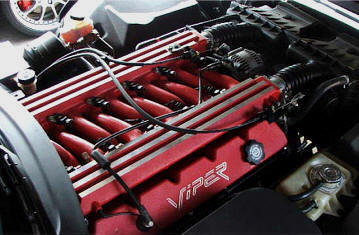
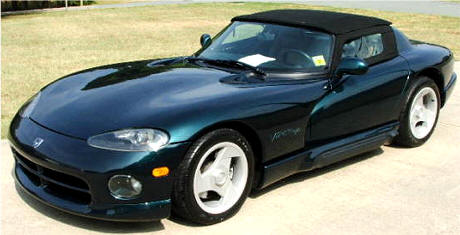
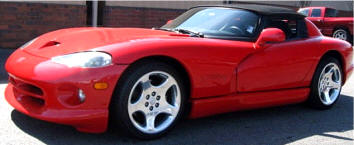
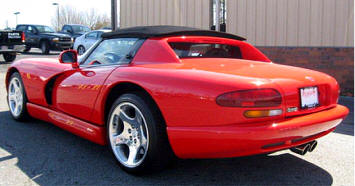
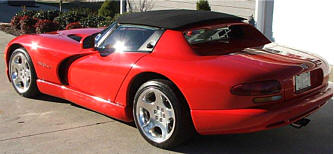
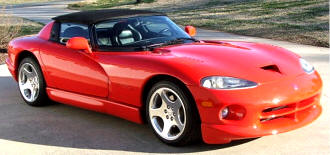
The First Generation Dodge Viper
Bob Sheaves wrote:
The Viper, at its introduction to the public, was intended to be two things to the corporation. The public version was that Chrysler needed a halo car to show they were still the best at building a low cost vehicle of any type and beating the old Shelby Cobra 0-100-0 times was a showman’s way of achieving just that. Privately (and more importantly), within the corporation, the Viper was a production technique test bed- to see if the corporation really could develop new methods of manufacture and assembly to lower the cost of a vehicle. It was originally intended to be killed off and a totally different vehicle replace it in the 1997 model year.
If you take a look under the skin of a 1st generation Viper, it was a crude and rude “kit car,” similar to what home builders had been building for years in Cobra replicas. Chrysler (actually JTE engineers working on their own time) translated this into a vehicle and production line that, in one fell swoop, became the most sought after assignment in the corporation up to that point.
The following is based on information supplied by Dodge
Team Viper’s primary goal was a vehicle that concentrated on performance above all else. Their benchmark: to go from 0 to 100 back to 0 in under 15 seconds.
The first result was a show car, which appeared on January 4, 1989 at the North American International Auto Show in Detroit to test public reaction; orders began to flow before the show ended, and the “go” was given.
Chrysler decided to use the Viper RT/10 to test its new platform team concept, taken from Honda’s process. An independent cross-functional team was created, making its own rules and creating its own supplier base. The team leader sifted through scores of volunteers to find appropriate people. Team Viper began three years of intensive, often around-the-clock operations that stretched from Italy, where the aluminum engine block was perfected — to the race tracks at Nelson Ledges and Road Atlanta, where they fine-tuned the chassis and powertrain. Team members worked closely with major automotive suppliers to develop unique components for the Viper RT/10 which would withstand the tremendous stresses associated with high-performance driving. For Chrysler, the Viper itself was considerably less important than the lessons learned in the platform teams, which would soon create in rapid succession the LH (Intrepid), PL (Neon), Clouds (Stratus), new minivans, new Ram, Prowler, and more.
Chassis prototypes, called “mules” in the automotive industry, were developed to study vehicle dynamics. Within a year of Viper’s auto show appearance, a V-8-powered mule was being tested. A few months later, a stable-mate powered by a cast iron V-10 (presumably from the Ram) joined the test fleet. Finally, in May 1990, Chrysler announced that the Viper would be made with the aluminum V-10; and in May it performed as the official pace car of the Indianapolis 500. Finally, in December of 1991, the first red Viper RT/10 production vehicles rolled off the New Mack Avenue assembly line — exactly three years after the concept car’s 1989 auto show triumph. A second color, black, appeared in 1993, followed in 1994 by yellow and emerald green.
The RT/10 was joined by the Viper GTS in 1996, bringing some refinement to the design, so that it would be one of the world’s premier Grand Touring cars rather than a raw racer. The GTS was seen as catering to a broader customer base than the RT/10. While the GTS and the RT/10 look much alike, more than 90 percent of the Coupe was new. Every major part was subjected to scrutiny with telling effect: the GTS with air conditioning weighed nearly 100 pounds less than the 1994 RT/10 without air. Weight reduction changes on both platforms reduced weight by 200 pounds; these included an all-aluminum suspension system and re-engineered frame. For GTS, weight reduction was focused in the engine and cooling system, where over 80 pounds were removed.
By 1998, 9,500 Vipers cruised the world’s boulevards and racetracks, building a very strong and extremely enthusiastic owner core. Currently there are more than 1,700 members of the Viper Club of America and 27 Viper Clubs throughout the United States.
What is in a Dodge Viper - and how it is made
Engine
Viper’s 8.0-liter engine is the largest and most powerful available today in an American production sports car. Viper GTS Coupe and RT/10 Roadster share the same 450 horsepower (460 in GT2 and ACR models) engine, suspension, brake system and adjustable pedal set.
Air intake is through a cast aluminum manifold with formed tubes, including an integral fuel rail cored in the castings. The dual throttle bodies and bottom-feed high-impedence fuel injectors control fuel flow and mixture. Fuel is fed to the injectors by a sequential multipoint injection system.
The engine’s forged aluminum pistons are set in cast iron liners. The aluminum cylinder head features a conventional two valves per cylinder with higher-revving dual valve springs.
While a natural extension of the classic American V-8 (the small-block LA series, to be exact), a number of the V-10’s unusual design features were derived from Formula One engines. Among these features are a closed tappet gallery for better intake manifold seating, and a sophisticated internal water flow system which traces its route outside the engine block, inside the cylinder head, around each cylinder and inside each combustion chamber for increased engine cooling.
Spent combustion gasses travel through a stainless steel tubular exhaust manifold, then pass through unique sill-mounted catalytic converters and exit at the center rear.
The six-speed manual transmission was designed to harness Viper’s substantial power and match its high-performance expectations. It boasts an electronic reverse lockout feature and first-to-fourth skip-shift for fuel economy.
In developing this engine, Team Viper set out to maintain the simple powertrain design of classic high-performance sports cars — because simplicity leads to durability, reliability and serviceability.
Chassis Construction
Viper’s massive V-10 engine is mounted on what is believed to be the stiffest sports car chassis ever built.
The engine is cradled by two massive rectangular-tube frame rails, which turn out at the front bulkhead and continue on down the sides. Positioned between the front bulkhead and the back of the cockpit is a central backbone of smaller rectangular tubes. This is attached at the back to a cage or box which encompasses the rear suspension, a 19-gallon fuel tank, a spare tire, the battery and the trunk.
The fully independent front and rear suspensions feature unequal-length upper and lower “A” arms and coil-over springs made of lightweight, yet strong micro-grain alloy steel. High-performance gas-filled shocks minimize aeration.
The power-assisted rack-and-pinion steering system features positive on-center feel and a fast 16.7:1 steering ratio for quick and responsive maneuvering. Lock to lock is accomplished in a mere 2.4 turns. Viper’s turning circle is 40.5 feet and its maximum turning angle is 28 degrees.
Viper’s high performance brake system features four-piston front calipers with huge 13″ x 1.26″ vented rotors up front and 13″ x.86 vented rotors at the rear. This system was specially designed to help meet the stated test-track goal of 0-100-0 mph in less than 15 seconds.
Truly massive high performance Michelin Pilot Sport tires created for the Viper are instrumental in translating the car’s abundant horsepower and torque to more linear terms. These directional tires, 275/35ZR18 front and 335/30ZR18 rear, are a major factor in Viper’s 1g lateral acceleration capability.
The tires are mounted on forged aluminum wheels with Viper logo centers (BBS forged aluminum wheels with chrome Viper Head center caps for the GT2 and ACR models).
Finally, Viper’s cooling system consists of a lightweight copper-core radiator and an electronically controlled dual-speed electric fan. A front-mounted engine air-to-oil cooler is also standard.
Assembly And Testing
Each Dodge Viper is hand-assembled at a special Detroit, Michigan facility on Conner Avenue by carefully chosen, skilled UAW workers with over 300 hours of training each.
Each Viper is made up of approximately 50 component modules which are shipped to the Viper facility from locations throughout North America. Stamping, casting, painting and welding take place off-site. Composite body panels arrive already painted. Complete instrument panels are supplied with the gauges tested and set in place. Engines are assembled and tested at a Chrysler engine plant.
The Conner Avenue Assembly Plant has adjacent work stations. Adjustments are made at each work station by individual craftspersons acting as their own inspectors, eliminating traditional repair stations and inspectors. Problems are immediately dealt with, even if they require a discussion with the on-site Team Viper engineer. All procedures are verified by assembly team members, with working team leaders coordinating efforts through craft managers.
The Viper assembly process is as unique as the car itself, even extending to testing procedures. For example, as is the case with race cars, wheel alignment includes adjustment of “bump steer.” A special machine is used to align all four wheels off their wheel hubs. In this way, the wheels are moved up and down in their suspension travel and alignment is set in three different positions.
Every Viper is also “roll tested,” which involves running the car at speed, in place, on special rollers right at the assembly center while the car is a “hot rolling chassis” minus all body panels. It is driven through all six speeds of its transmissions, up to 90 mph, in order to validate the proper functioning of all systems under actual driving conditions.
Background
The Viper was conceived as a futuristic take on the classic American muscle sports car. While there are some who insist that the iconic AC Cobra was a source of inspiration, the final version of the Viper was far too large and heavy to seriously claim any direct lineage with the compact and lightweight vehicle. Most saw claims to kinship with the Cobra as a marketing exercise, although Carroll Shelby was involved in the initial design of the Viper. Notably, the Viper took many design cues from the Shelby Cobra Daytona.
The Viper was initially conceived in late 1988 at Chrysler’s Advanced Design Studios. The following February, Chrysler president Bob Lutz suggested to Tom Gale at Chrysler Design that the company should consider producing a modern Cobra, and a clay model was presented to Lutz a few months later. The car appeared as a concept at the North American International Auto Show in 1989. This concept vehicle was originally named Copperhead because of its low, wide appearance characteristic of reptiles. The name would later be changed to Viper. Public reaction was so enthusiastic, that chief engineer Roy Sjeoberg was directed to develop it as a standard production vehicle.
Sjoberg selected 85 engineers to be “Team Viper”, with development beginning in March 1989. The team asked the then-Chrysler subsidiary Lamborghini to cast some prototype aluminum blocks based on their V10 truck engine for sports car use in May. The production body was completed in the fall, with a chassis prototype running in December. Though a V8 was first used in the test mule, the V10, which the production car was meant to use, was ready in February 1990.
Official approval from Chrysler chairman, Lee Iacocca, came in May 1990. One year later, Carroll Shelby piloted a pre-production car as the pace vehicle in the Indianapolis 500 race. In November 1991, the car was released to reviewers with first retail shipments beginning in January 1992.
The first prototype was tested in December 1989. It debuted in 1991 with two pre-production models as the pace car for the Indianapolis 500 when Dodge was forced to substitute it in place of the Japanese-built Stealth due to complaints from the UAW, and went on sale in January 1992 as the soft roofed RT/10 Roadster.
The centerpiece of the car was its engine. Originally designed for a truck platform and based on the Chrysler LA design, a division of the Chrysler Corporation revamped Dodge’s cast-iron block V10 for the Viper by recasting the block and head in aluminum alloy. Some within Chrysler felt the pushrod two-valve design, while adequate for the truck application, was unsuitable for a performance car and suggested a more comprehensive redesign which would have included four valves per cylinder. Chrysler, however, was uncertain about the Viper’s production costs and sales potential and so declined to provide the budget for the modification.
The engine produced 400 hp (298 kW) at 4600 rpm and 465 ft·lbf (630 N·m) of torque at 3600 rpm, and thanks to the long-gearing allowed by the torquey engine, provided surprising fuel economy at a claimed 21 mpg US (11.2 L/100 km) if driven sedately. The body was a tubular steel frame with resin transfer molding (RTM) fiberglass panels. Much of the suspension, following the manufacturer’s “engine first” mantra, was sourced from the Dodge Dakota pickup. Typical of American performance car design, it had a front-mounted engine driving the rear wheels; it was also very light in respect to modern Ferrari’s with a curb weight of 3,280 lb (1,488 kg) and lacked many modern driver aids such as traction control or anti-lock brakes. Car and Driver magazine referred to this generation as “the world’s biggest Fat Boy Harley”, and likened driving it to “playing ping pong with a Louisville Slugger baseball bat.” Despite this, in straight line performance, it completed a quarter mile in 12.6 seconds and had a maximum speed of over 180 mph (290 km/h).
The car was also devoid of any real luxuries. Along with the absence of exterior door handles, the vehicle lacked windows and even a roof. Although a soft top cover was available, it was designed primarily for outdoor vehicle storage. In terms of interior space, the trunk was large enough for the rain cover and little else. Chrysler’s purpose for the vehicle was clear in almost every aspect of its construction; from the unyielding bolstering of the seats to the side-exit exhaust that came with its own disclaimer against passenger injury. Performance came first, creature comforts last (if at all).
1992
The 1992 Viper began Dodge’s legendary sports car fleet, and did so in fine fashion. With a 8.0-liter, 10 cylinder engine that pumping out 400 hp, the raw power of the 1992 Dodge Viper has done its namesake proud. Built for acceleration, the Viper is a must-drive for any speed junkie.
The 6 speed manual transmission gives an experienced driver absolute control over the 400 hp. The 2 door, 2 seat 1992 Dodge Viper gets 15 city miles per gallon and 17 highway, which could go quick if you’re driving it as fast as it wants to be driven. The fact that the 1992 Viper didn’t come with AC out of the factory might be an incentive to keep the speed up, if the pure fun isn’t enough of a reason. The interior of a convertible moving 80 miles an hour or faster isn’t going to get too hot.
Owners of the 1992 Dodge Viper love the acceleration and power of the car, though it’s touchy to drive, and many suggest drivers not used to sports cars should take it easy in the Viper. They do complain about the lack of comforts like air conditioning and a backseat. But if you’re looking for a fast, summer-fun car, then the 1992 Dodge Viper might be the car for you.
1993
1993 heralded the continuation of a legend: the Dodge Viper. Not many changes were made from 1992, so the 1993 Dodge Viper still has an 8.0-liter, 10-cylinder engine that can churn out 400 hp, controlled by a 6-speed manual overdrive transmission. The only major change was the gas mileage: city dropped to 13 mpg, and highway was boosted from 17 mpg to a far more reasonable 21 mpg.
The 1993 Dodge Viper was built for just one thing: to go fast and have fun. Unfortunately, only 1500 of the 1993 Vipers were made, so this year isn’t common. But if you can find a one, there are few cars out there that can match the 1993 Viper’s acceleration, power or attitude.
Owners of the 1993 Dodge Viper are crazy about the power the car is capable of and its ability to turn heads. They aren’t particularly crazy about the lack of comforts like air conditioning, a backseat or trunk space, but the Viper isn’t about comfort. It’s about speed, and to that end, Dodge succeeded admirably for the second year running.
1994
Owners of previous Vipers asked, and Dodge saw to it that they received. The 1994 Dodge Viper was the first year the Viper had air-conditioning installed as a factory option, a major advance for this powerful sports car. But don’t worry. In adding this single, but wonderful, comfort, the 1994 didn’t lose any of the power or acceleration that the Dodge Viper had become famous for. With an 8.0-liter 10-cylinder engine churning out 400 hp, the 1994 Dodge Viper is a speed machine.
With its noticeable, low profile shape, the 2-door roadster convertible Dodge Viper turns most heads it passes. There is very little that is practical about the 1994 Dodge Viper, but it wasn’t built with practicality in mind, just speed. With 14/22 mpg (city/highway), the 22-gallon tank will take you wherever you need to go quickly, if not necessarily fuel-efficiently. Who wants to drive a Viper in the city anyway?
Owners of the 1994 Dodge Viper love the speed, acceleration and head-turning ability that the Viper has become so well known for. The lack of creature comforts is still a minor issue, as is the difficulty with putting on and removing the hard-top, but the Viper does what it was made to do: go very fast and make other people jealous.
1995
What do you get when you take an 8.0-liter, 10-cylinder engine that puts out 400 hp, drop it into one of the most recognizable and confident 2-door roadster convertible bodies in automotive history, and put a speed hungry driver behind the wheel? The 1995 Dodge Viper with you driving, that’s what. Almost nothing was changed in the Viper from 1994 to 1995. Why mess with near perfection, right?
Air-conditioning is the only real factory option available for the 1995 Dodge Viper still. But with 2 seats, the only people you have to keep comfortable are yourself and a passenger (if anyone you know gets that lucky), and you’re probably going to be too busy enjoying the raw power at your fingertips through the wheel and the 6-speed manual transmissions to notice insignificant creature comforts or care about your passenger’s comfort level. If they’re not as impressed with your Viper’s performance, who needs ’em anyway? There was a small but unfortunate drop in gas mileage in the 1995 Dodge Viper, down to 12/21 mpg (city/highway), but sacrifices sometimes need to be made for power.
Owner opinion of the 1995 Dodge Viper is just as high as it has been in previous years. Consumer reviews of the 1995 Dodge Viper typically revolve around the speed and acceleration (claims of 0-60 of under 4 seconds have been made by more than one user). Viper owners are die-hard believers in this muscle car, and they seem to have good reason to be.
1996
Transition year. Introduce the next Generation GTS Hard top Coupe. Viper RT-10 Convertible last year as a Generation 1 although some consider this car a Viper Generation 2.
Performance:
- 0–60 mph: 4.5 seconds
- 0–100 mph: 10.0 seconds
- Quarter mile: 12.5 seconds @ 120 mph (193 km/h)
- Top speed: 180+ mph (290+ km/h) (confirmed by Road & Track, 1992)
- 700 ft slalom: Over 66 mph (106 km/h)
- Skidpad average g: 0.97
| Production | 1992–1995 |
|---|---|
| Body style(s) | 2-door roadster |
| Engine(s) | 8.0 L V10 400 hp (298 kW) 465 lbf·ft (630 N·m) |
| Transmission(s) | 6-speed manual |
| Wheelbase | 96.2 in (2443 mm) |
| Length | 175.1 in (4448 mm) |
| Width | 75.7 in (1923 mm) |
| Height | 44.0 in (1118 mm) |
| Curb weight | 3400 lb (1542 kg) |
Dodge Viper GT2 and Dodge Viper ACR 1998-99
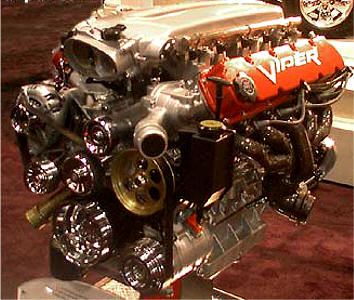
Dodge Viper GT2
In 1995, Chrysler introduced the Dodge Viper GTS-R, a limited-production racing car strictly intended for worldwide GT-class competition. The standard powertrain was a 525-horsepower 8.0 liter V-10, with 650- or 750-horsepower engines available as an option. It clinched the 1997 FIA GT2 championship and the 1998 24 Hours of Le Mans in the GT2 Class.
To publicize this achievement, Chrysler built 100 street-legal 1998 GT2 Championship Edition Vipers. It will be painted the same way as the GTS-R, with an aerodynamics package of fascia dive plates, black sill ground effects, a front splitter and rear wing. An enhanced powertrain (see the ACR description) raised performance to 460 hp @ 5200 rpm from 450 hp @5200 rpm and increased torque to 500 ft/lb at 3600 rpm from 490 ft/lb at 3700 rpm.
Special badging and graphics include a “Viper GTS-R” banner on the windshield and hood sides and an American flag appears on the upper quarter panel with “FIA GT2 Champion” underneath. 18-inch Michelin MXX3 tires and unique 18-inch one-piece wheels complete with a chrome Viper snake head logo on the center caps complete the visibility options.
The interior is black with blue accents on door inserts, bolsters, and the center console and parking brake. A dash plaque highlighting the commemorative series and vehicle identification number (VIN) is mounted on the center console. The interior comes with a five-point restraint system, identical to the restraint system used by Viper Team ORECA, the France-based factory race team that captured both championships. The retail price was $85,200 including destination.
Dodge Viper ACR
The 1999 Dodge Viper ACR (American Club Racer) is a hybrid of the GTS-R and the standard Viper. About 100 to 200 of these special edition Vipers will be available in the first quarter through Dodge dealers. The major changes to make these vehicles race-ready were more power, lower weight, and refined handling:
Smooth intake hoses and a K&N air filter element increased air flow to add 10 horsepower.
60 pounds were cut by removing the audio system, air conditioning, and fog lights (brake cooling ducts can be put into the openings).
Suspension components have been replaced by GTS-R racing units with Meritor (formerly Rockwell) springs. Michelin Pilot Sport high-performance radials (P275/35ZR18 front, P335/30ZR18 rear) mount on one-piece 18-inch BBS wheels for improved traction.
The ACR will have the interior enhancements of standard Vipers: power sideview mirrors, cloth-covered sun visors, a satin aluminum finish on gauge trim rings, parking brake handle and release button, shift lever shaft, gearshift knob and inside door release handles.
The ACR concept started with the Dodge Neon; the idea is to provide racing enthusiasts with a reasonably priced entry to Showroom Stock classes. Neon ACRs won the Sports Car Club of America (SCCA) Showroom Stock/C class in 1995, 1996 and 1997. Neon drivers also scored 127 wins and 311 top-three finishes in 216 national events; one Pro Rally production-class championship and five Solo Two national championships in 1997.
Special Dodge Viper ACR Equipment
Special ACR badging and graphics including commemorative dash plate. Five-point restraint system, K&N air cleaner, smooth air cleaner hoses, one-piece 18-inch BBS wheels with chrome Viper Head center caps and Michelin Pilot Sport tires. Vents replace driving lamps. A/C system/compressor deleted, audio system deleted, Koni racing shocks and Meritor springs. A/C and audio systems are optional
Instrumentation
Analog speedometer, odometer, trip odometer, tachometer, voltmeter, oil pressure, coolant temperature and fuel gauges. Low oil pressure, coolant temperature, air bags, high beam, seatbelt, brake system and service engine soon, 2-3 shift lockout, battery voltage, door ajar, turn signals and security alarm indicator lights
Body And Frame
Resin transfer molded (RTM) composite body with sheet-molded compound (SMC) hood, backbone tubular steel space frame with center spine and separate cowl structure. Full-access forward-opening hood/fender assembly
Powertrain
| Engine | 8.0-liter, OHV, SMPI V-10 |
| Type & Description | Ten cylinder, 90º V-type, liquid-cooled |
| Displacement | 488 cu. In. (7,990 cc) |
| Bore x Stroke | 4.00 x 3.88 (101.6 x 98.5) |
| Valve System | OHV, 20 valves, roller-type hydraulic lifters, dual valve springs |
| Intake System | Sequential, multi-port electronic fuel injection with bottom-feed, high-impedance injectors, aluminum ram-tuned intake manifolds with dual plenums |
| Exhaust | Stainless steel tubular exhaust manifolds, multiple-branch design, three-way catalytic converters with dual oxygen sensors, two per side, feedback fuel-air ratio control, one-piece stainless steel catalyst in sill and muffler assembly featuring rear exit exhaust |
| Construction | Aluminum alloy block w/cast iron liners, aluminum alloy heads, forged-steel crankshaft, six main bearings |
| Cooling | Copper-core radiator, dual-speed electric fan, front-mounted engine air-to-oil cooler |
| Compression Ratio | 9.6:1 |
| Horsepower (SAE net) | 460 bhp (343 kW) @ 5200 rpm |
| Torque (SAE net) | 500 lb. ft. (664 Nm) @ 3700 rpm |
| Max Engine Speed | 6000 rpm |
| Fuel Requirement | Unleaded premium, 91 octane R+M/2 |
| Oil Capacity | 8 qt. (7.6 L) |
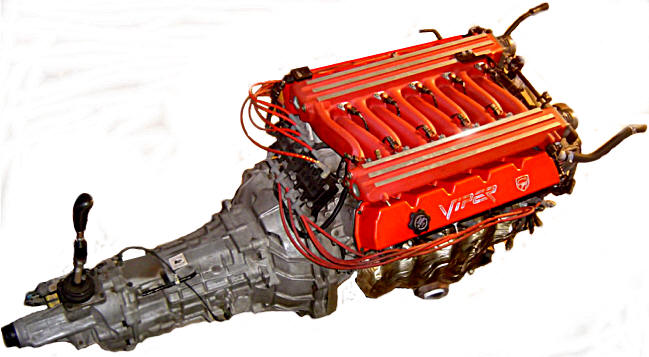
Transmission
Manual, 6-speed overdrive, synchronized in all gears; electronic 1-4 skip-shift and reverse lockout mechanisms. Aluminum housing, 12.2-inch hydraulic single dry-disc clutch
Gear Ratios
| 1st | 2.66 | 2nd | 1.78 |
| 3rd | 1.30 | 4th | 1.00 |
| 5th | 0.74 | 6th | 0.50 |
| Effective Final Drive | 3.07 | Overall Top Gear | 1.54 |
Chevrolet Corvette ZO6 vs. Dodge Viper
Let us begin by saying that Allpar is in an odd position when it comes to comparing the Viper and Vette, because we’ve only driven one of them. That said, we can make some observations.
The current generation Corvette is fresh from a 2001 redesign, which provided extra torque to the engines (and a little more horsepower), a new top-of-the-line Z06, and upgrades to the active suspension and traction control system. All together, the result is a car that’s a lot easier to live with than the Viper – from what we know.
The top end Z06 moves from zero to sixty in a Viper-status four seconds flat, according to Chevrolet. Even the base automatic can get there in five seconds, which, given the heavy clutch and stick, is an argument for buying the automatic.
Both Viper and Vette have appropriate sounds for high-performance muscle cars. Both have excellent handling, the Corvette’s aided by an active suspension. But only the Vette has a dry weather traction control that makes extreme acceleration easy even for the novice driver. The active handling also makes the car much easier to handle, an important consideration for drivers not trained to handle racing cars.
The Corvette provides spacious accommodations for two, but there’s not much space for doodads and gizmos, and the hard-to-open center console is very shallow. Passengers can reach back into the trunk, since there’s no partition, but nothing will stay in place just behind the seats for very long.
Chassis & Suspension
| Ground Clearance | 5.0 (127) |
| Curb Weight | 3356 lbs (1525 kg) / 3403 lbs (1547 incl. optional A/C and audio systems) |
| Weight Distribution f/r | 48/52 |
| Front | Independent with cast aluminum unequal-length upper and lower “A” arms. GTS-R-style Meritor racing coil springs in threaded seats. GTS-R aluminum-bodied Koni racing shock absorbers, double-acting, high-pressure gas-charged, externally adjustable for bump and rebound, 1.06 in./27 mm tubular front stabilizer bar |
| Rear | Independent with cast aluminum unequal-length upper and lower “A” arms with separate toe link. GTS-R-style Meritor racing coil springs in threaded seats. GTS-R aluminum-bodied Koni racing shock absorbers, double-acting, high-pressure gas-charged, externally adjustable for bump and rebound, 0.86 in./22 mm tubular rear stabilizer bar |
| Steering Type | Power-assisted rack & pinion |
| Overall Ratio | 16.7:1 |
| Turning Diameter | 40.5 ft. (12.34 m) curb to curb |
| Steering Turns | 2.4 lock to lock |
| Wheels | BBS forged aluminum |
| Size | 18 x 10 front, 18 x 13 rear |
| Tires, f/r | P275/35ZR18 / P335/30ZR18 Michelin Pilot Sport high-performance radials |
| Front Brakes, Size & Type | 13.0 x 1.26 (330.5 x 32) vented disc power assisted w/four-piston Brembo fixed caliper |
| Swept Area | 304.8 sq. in. (1966 sq. cm) |
| Rear Brakes, Size & Type | 13.0 x 0.87 (330.5 x 22) vented disc power assisted w/single piston Brembo sliding caliper |
| Swept Area | 244.3 sq. in. (1576 sq. cm) |
| Brake Power Assist Type | Tandem diaphragm vacuum w/zero lost travel |
While the traction control and active suspension make some aspects of driving the Corvette easy, shifting is not one of them. It takes time to get the feel of the heavy shifter and clutch, not to mention the six-gear pattern. A first-to-fourth feature can sometimes get in the way, on both cars.
Both interiors are sporty and unique. The Corvette’s instrument panel features a well-programmed and easily operated trip computer, alphanumeric readout, and easy to read gauges. The speedometer switches between mph and kph at the press of a button, swinging the needle around as needed (because of this, the speedometer goes up to 200). Pressing an options button allows the driver to set preferences for car locking, seat movement, and other features.
The Corvette’s main control drawback is the cruise control stalk, which, in GM tradition, is hard to use, and on the same stalk as the windshield washer, wipers, and headlights. However, when activated – or when the speed is changed – the alphanumeric message area tells what speed it’s set for, a nice feature.
Unlike the Viper, the Corvette comes in two flavors – base and Z06. The base model can get from zero to sixty in five seconds with an automatic, 4.5 with a manual, making it almost the equal of the Z06. (The Z06 also handles better). However, the base model has a smoother ride, and an automatic transmission for those who want it – in this car, not a major drawback.
So which is the king of the hill? In terms of being a daily driver, rather than a racing car, we’d say probably the Corvette. Its dry-weather traction control and active suspension make it much more forgiving for most drivers. It’s also a lot less expensive than the limited-production Viper. On the track, though, we suspect the Viper will continue to take top honors for the foreseeable future.
Dodge Viper Overview
Brief Description of the Viper Generations
The Viper began in 1988 when Chrysler president Bob Lutz recommended building a modern Cobra to designer Tom Gale of Chrysler’s Advanced Design Studios. Carroll Shelby was influential in design also and used the legendary AC Cobra and Shelby Cobra Daytona as his inspiration. At the time, Lamborghini was a subsidiary of Chrysler and they were tasked with casting a prototype aluminum engine block for the Viper based on Dodge’s V10 truck engine.
The concept car was originally named RT/10 and first appeared at the North American International Auto Show in 1989. The concept was a big hit and Chrysler chief engineer Roy Sjeoberg and Team Viper got the ok to develop the concept car into a standard production vehicle. In May 1990, Lee Iacocca approved production of the Viper and retail shipments began in January 1992.
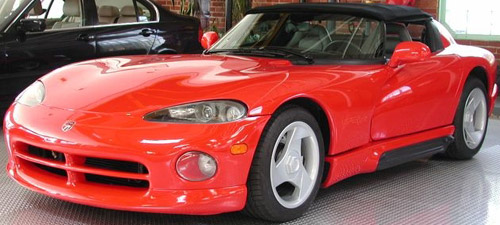
First generation SR (1992–1995)
Generally the Viper R/T 10 1996 convertible was considered a Gen 1 while the Viper GTS 1996 coupe was consider a Gen 2. The heart of the Viper is its V10 aluminum truck engine. Chrysler’s intention for the new Viper was clear, performance is first priority. The SR generation lacked ABS brakes, traction control, door handles, a roof, windows, or any luxury amenities what so ever. Carroll Shelby drove a SR Viper as the pace car in the 1991 Indianapolis 500.
Engine Specs:
- 8.0 L (488.2 cu in) V10
- 400 hp (298 kW)
- 465 ft·lbf (630 Nm)
Performance:
- 0–60 mph: 4.5 sec
- 0–100 mph: 10.0 sec
- 1/4 mile: 12.5 sec @ 120 mph (193 km/h)
- Top speed: 180+ mph (290 km/h)
- 700 ft (210 m) slalom: over 66 mph (106 km/h)
- Skidpad average g: 0.96
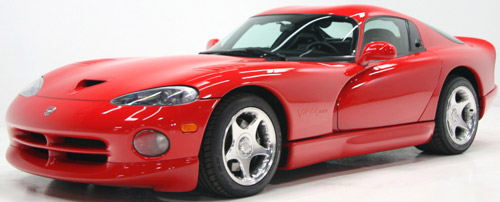
Second generation SR (1996–2002)
Generally the Viper R/T 10 1996 convertible was considered a Gen 1 while the Viper GTS 1996 coupe was consider a Gen 2. In 1996 a coupe model called the GTS was introduced with a lighter more powerful engine. The roof featured raised sections known as the “double bubble” above each seat to accommodate drivers wearing helmets. In 1999 18” wheels and an improved exhaust system further refined the Viper. Perhaps not technically a new generation, the second SR Viper increased horsepower, stiffened and lightened chassis, improved suspension and braking – ABS system introduced in 2001. The Viper GTS was chosen as the pace car for the 1996 Indianapolis 500.
Engine Specs:
- 8.0 L (488.2 cu in) V10
- 450 hp (336 kW)
Performance:
- 0–60 mph: 4.0 sec
- 0–100 mph: 8.6 sec
- 1/4 mile: 12.2 sec @ 118 mph (190 km/h)
- Top speed: 190+ mph (306 km/h)
- Slalom: 71.3 mph (115 km/h)
- Skidpad average acceleration: 0.98 g (9.6 m/s²)
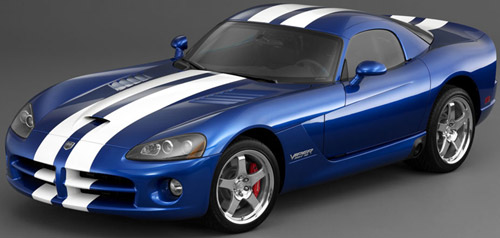
Third generation (2003-2006)
A major redesign in 2003 introduced the third ZB generation Dodge Viper. Daimler Chrysler’s Street and Racing Technology Group were in charge of the build. The Viper became more angular and aggressive looking and the engine was enlarged to 8.3 L (505 cid/8,285 cc) that increased output to 500 hp (370 kW) and 525 lb ft (712 Nm) of torque.
Engine Specs:
- 8.3 L (506.5 cu in) V10
- 510 bhp (380 kW) @ 5600 rpm
- 535 lb·ft (725 Nm) @ 4200 rpm
Performance:
- 0–60 mph: 3.9 sec
- 0–100 mph: 8.3 sec
- 1/4 mile: 11.7 sec @ 123 mph (198 km/h)
- Top speed: 195 mph (314 km/h)
- Slalom: 70 mph (113 km/h)
- Skidpad average acceleration: 1.05 g (10.3 m/s²)
- 100–0 mph braking distance: 274 ft (84 m)
No 2007 model Vipers were produced.
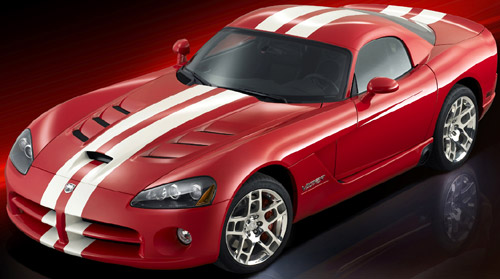
Fourth generation (2008–2010)
In 2008, power for the Viper increased to 600 horsepower (450 kW) and 560 lb ft (759 Nm) of torque. Engine displacement increased to 8.4 liters (512 ci/8354 cc) and modifications like better flowing heads with larger valves, Mechadyne variable valve timing, and dual electronic throttle bodies further tuned the Viper engine. Rev limit increased by 300 rpm due to improved valve-train stability and the new camshaft profiles and valve-springs. The development of the engine was done in conjunction with McLaren Automotive and Ricardo Consulting Engineers.
Engine Specs:
- 8.4 L (512.6 cu in) V10
- 600 bhp (447 kW) @ 6000 rpm
- 560 lb·ft (759 Nm) @ 5600 rpm
Performance:
- 0–60 mph: 3.5 sec
- 0–100 mph: 7.6 sec
- 1/4 mile: 11.6 sec @ 128 mph (206 km/h)
- Top speed: 202 mph (325 km/h)
- Slalom: 70+ mph (113+ km/h)
- Skidpad average acceleration: 1.06 g (10.4 m/s²)
- 100–0 mph braking distance: 270 ft (82 m)
*There were no 2011 or 2012 model year Vipers were produced.
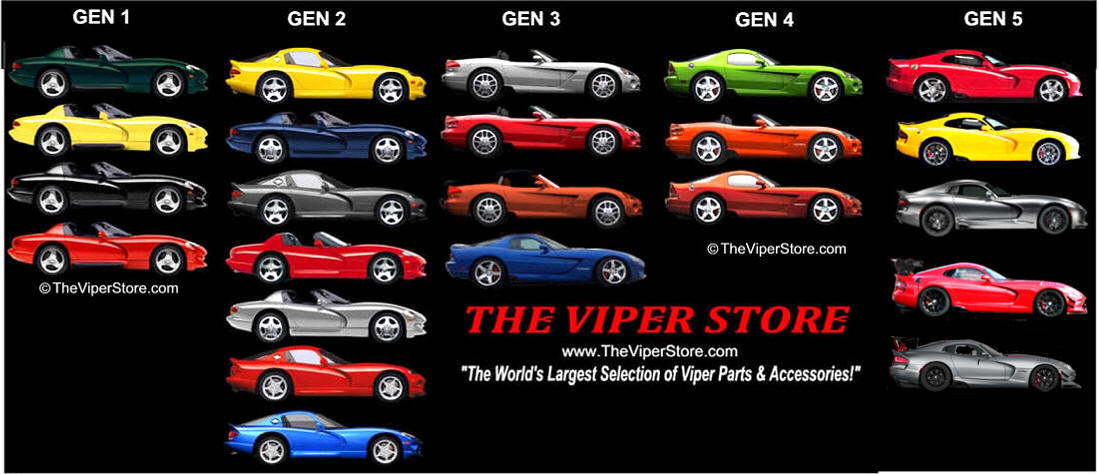
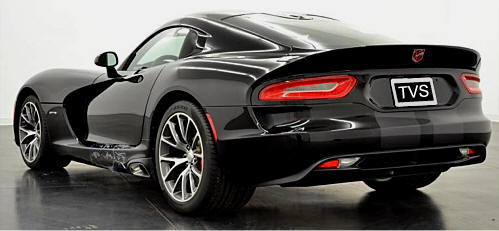
Fifth generation (2013–2017)
- Curb weight: 3,354 lb (1,521 kg)
- Horsepower: 640 hp @ 6150 rpm (645 hp starting from 2015 Viper)
- Torque: 605 lb·ft
- Fuel Economy: 12/19 mpg (city/highway)
- Transmission: 6-speed manual
- Drivetrain: Rear-wheel drive
- Price: $97,395 – $120,395
- Engine: 8.4L V10 (512 cu in.)
- 0–60 mph: 3.0 sec
- Top speed: 202 mph (325 km/h)
- Transmission model: Tremec TR-6060 manual
- Wheelbase: 98.8 in (2,510 mm)
- Length: 175.7 in (4,460 mm)
- Width: 76.4 in (1,940 mm)
- Height: 49.1 in (1,250 mm)
ARTICLES
Brief Description of the Viper Generations
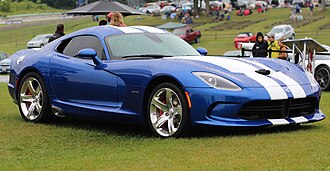
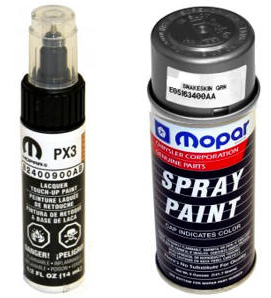
DODGE VIPER Paint Codes 1992-2015
We can sell you any amount of factory paint.
| Year | Model | Paint Color Name | Code | Sample |
| 1992 | Viper | Viper Red | PRN | |
| 1993 | Viper | Emerald Green | PGQ | |
| 1993 | Viper | Dandelion Yellow | PJE | |
| 1993 | Viper | Viper Red | PRN | |
| 1993 | Viper | Viper Black | PX3 |
| Year | Model | Paint Color Name | Code | Sample |
| 1994 | Viper | Emerald Green | PGQ | |
| 1994 | Viper | Dandelion Yellow | PJE | |
| 1994 | Viper | Viper Red | PRN | |
| 1994 | Viper | Viper Black | PX3 | |
| 1995 | Viper | Emerald Green | PGQ | |
| 1995 | Viper | Viper Bright Yellow | PJE | |
| 1995 | Viper | Viper Red | PRN | |
| 1995 | Viper | Viper Black | PX3 |
| Year | Model | Paint Color Name | Code | Sample |
| 1996 | Viper | Viper GTS Blue | PBE | |
| 1996 | Viper | Viper Red | PRN | |
| 1996 | Viper | Stone White | PW1 | |
| 1996 | Viper | Viper Black | PX3 | |
| 1997 | Viper | Viper GTS Blue | PBE | |
| 1997 | Viper | Viper Red | PRN | |
| 1997 | Viper | Stone White | PW1 | |
| 1997 | Viper | Viper Black | PX3 |
| Year | Model | Paint Color Name | Code | Sample |
| 1998 | Viper | Vapor Silver | PA9 | |
| 1998 | Viper | Viper Bright Yellow | PJE | |
| 1998 | Viper | Viper Red | PRN | |
| 1999 | Viper | Vapor Silver | PA9 | |
| 1999 | Viper | Viper Red | PRN | |
| 1999 | Viper | Viper Black | PX3 |
| Year | Model | Paint Color Name | Code | Sample |
| 2000 | Viper | Viper Red | PRN | |
| 2000 | Viper | Vapor Steel Gray | PS6 | |
| 2000 | Viper | Viper Black | PX3 | |
| 2001 | Viper | Sapphire Blue | PBW | |
| 2001 | Viper | Viper Red | PRN | |
| 2001 | Viper | Viper Race Yellow | WYR |
| Year | Model | Paint Color Name | Code | Sample |
| 2002 | Viper | Viper GTS Blue | PBE | |
| 2002 | Viper | Graphite | PDR | |
| 2002 | Viper | Viper Red | PRN | |
| 2002 | Viper | Viper Race Yellow | WYR | |
| 2003 | Viper | Vapor Silver | PA9 | |
| 2003 | Viper | Viper Red | PRN | |
| 2003 | Viper | Viper Black | PX3 |
| Year | Model | Paint Color Name | Code | Sample |
| 2004 | Viper | Vapor Silver | PA9 | |
| 2004 | Viper | Viper Red | PRN | |
| 2004 | Viper | Viper Bright White | PWA | |
| 2004 | Viper | Viper Black | PX3 | |
| 2005 | Viper | Vapor Silver | PA9 | |
| 2005 | Viper | Venom Red | PRN | |
| 2005 | Viper | Viper Red | PRN | |
| 2005 | Viper | Copperhead Orange | PVR | |
| 2005 | Viper | Viper Bright White | PWA | |
| 2005 | Viper | Viper Black | PX3 |
| Year | Model | Paint Color Name | Code | Sample |
| 2006 | Viper | Viper GTS Blue | PBE | |
| 2006 | Viper | Viper Red | PRN | |
| 2006 | Viper | Viper Black | PX3 | |
| 2008 | Viper | Viper Bright Blue | PBC | |
| 2008 | Viper | Viper GTS Blue | PBE | |
| 2008 | Viper | Viper Violet | PCV | |
| 2008 | Viper | Viper Bright Orange | PK3 | |
| 2008 | Viper | Viper Red | PRN | |
| 2008 | Viper | Viper Black | PX3 |
| Year | Model | Paint Color Name | Code | Sample |
| 2009 | Viper | Viper Bright Blue | PBC | |
| 2009 | Viper | Graphite | PDR | |
| 2009 | Viper | Anaconda Green | GR | |
| 2009 | Viper | Viper Bright Orange | PK3 | |
| 2009 | Viper | Viper Red | PRN | |
| 2009 | Viper | Viper Bright White | PWA | |
| 2009 | Viper | Diamond Black | PXS | |
| 2009 | Viper | Viper Red Metallic | PRS | |
| 2009 | Viper | Viper Race Yellow | WYR |
| Year | Model | Paint Color Name | Code | Sample |
| 2010 | Viper | Viper Bright Blue | PBC | |
| 2010 | Viper | Viper GTS Blue | PBE | |
| 2010 | Viper | Graphite | PDR | |
| 2010 | Viper | Snakeskin Green | PGS | |
| 2010 | Viper | Viper Bright Orange | PK3 | |
| 2010 | Viper | Viper Red | PRN | |
| 2010 | Viper | Bright Orange | VG | |
| 2010 | Viper | Viper Bright White | PWA | |
| 2010 | Viper | Viper Red Metallic | PRS | |
| 2010 | Viper | Viper Black | PX3 | |
| 2010 | Viper | Viper Race Yellow | WYR |
| Year | Model | Paint Color Name | Code | Sample |
| 2013 | Viper | Viper GTS Blue | PBE | |
| 2013 | Viper | Viper Bright White | PWA | |
| 2013 | Viper | Black | PX8 | |
| 2013 | Viper | Viper Race Yellow | WYR | |
| 2013 | Viper | Adrenaline Red | PR7 | |
| 2013 | Viper | Shadow Blue Pearl | PBY | |
| 2013 | Viper | Gunmetal Pearl | PCC |
| year | model | paint color name | code | sample |
| 2014 | Viper | Billet Metallic | PSC | |
| 2014 | Viper | Black | PX8 | |
| 2014 | Viper | Header Orange | PL4 | |
| 2014 | Viper | Adrenaline Red | PR7 | |
| 2014 | Viper | Shadow Blue Pearl | PBY | |
| 2014 | Viper | Gunmetal Pearl | PCC | |
| 2014 | Viper | Viper Bright White | PWA | |
| 2014 | Viper | Viper Race Yellow | WYR |
| year | model | paint color name | code | sample |
| 2015 | Viper | Black | PX8 | |
| 2015 | Viper | Adrenaline Red | PR7 |  |
| 2015 | Viper | Very Bright White | PWA |  |
| 2015 | Viper | Billet Metallic | PSC |  |
| 2015 | Viper | True Blue Pearl | PBU |  |
| 2015 | Viper | Dozer | PY5 |  |
| 2015 | Viper | Competition Blue | PBD |  |
| 2015 | Viper | Gunmetal Pearl | PCC |  |
| 2015 | Viper | Dark Ceranic Gray | PAG |  |
Dodge RAM SRT10 Paint Colors
| Paint Code | Sample | 2005 Colors | Regular Cab | Quad Cab | Year Total |
| PX8 | Black | 471 | 1136 | 1607 | |
| PR4 | Flame Red | 453 | 777 | 1230 | |
| PSB | Bright Silver Metallic | 280 | 280 | 560 | |
| PW7 | White (CE) | 200 | 0 | 200 | |
| PYH | Yellow Fever | 200 | 300 | 500 | |
| Total | 1604 | 2493 | 4097 | ||
| PX8 | Black | 471 | 1136 | 1607 | |
| PR4 | Flame Red | 453 | 777 | 1230 | |
| PSB | Bright Silver Metallic | 280 | 280 | 560 | |
| PW7 | White (CE) | 200 | 0 | 200 | |
| PYH | Yellow Fever | 200 | 300 | 500 | |
| Total | 1604 | 2493 | 4097 |
| Paint Code | Sample | 2006 Colors | Regular Cab | Quad Cab | Year Total |
| PX8 | Brilliant Black Crystal | 220 | 465 | 685 | |
| PRJ | Inferno Red | 221 | 417 | 638 | |
| PDM | Mineral Gray | 131 | 310 | 441 | |
| Need Last 8 digits of VIN | Black Clear Coat | 87 | 93 | 180 | |
| Need Last 8 digits of VIN | Night Runner | 200 | 200 | 400 | |
| PR4 | Flame Red | 7 | 8 | 15 | |
| PSB | Bright Silver Metallic | 6 | 8 | 14 | |
| Total | 872 | 1501 | 2373 | ||
STATISTICS
NOTE: A word about the production tables. Trying to figure out Viper production figures is like going down the “Rabbit hole” or entering the “Twilight Zone”. There are many numbers from several “reputable” sources.
Unfortunately they all disagree. Some sources use model year figures and some use actual units produced in a calendar year. Some sources use a combination or simply don’t tell which they use. So here are some
of the best numbers out there. Take them for what they are.
Dodge completed just over 31,850 Viper (from 1992 to Feb 2016)
***Chevrolet Produced about 27,000 Corvettes in 2014 alone.
| Dodge Viper Production | TOTAL |
| Generation 1 | 6,709 |
| 1992 Totals | 285 |
| R/T 10 Convertible | 285 |
| 1993 Totals | 1,043 |
| R/T 10 Convertible | 1,043 |
| 1994 Totals | 3,083 |
| R/T 10 Convertible | 3,083 |
| 1995 Totals | 1,577 |
| R/T 10 Convertible | 1,577 |
| 1996 Totals | 721 |
| R/T 10 Convertible | 721 |
| Dodge Viper Production | TOTAL |
| Generation 2 | 10,422 |
| 1996 Totals | 1,166 |
| GTS Coupe | 1,166 |
| 1997 Totals | 1,788 |
| R/T 10 Convertible | 117 |
| GTS Coupe | 1,671 |
| 1998 Totals | 1,216 |
| R/T 10 Convertible | 362 |
| GTS Coupe | 854 |
| 1999 Totals | 1,249 |
| R/T 10 Convertible | 549 |
| GTS Coupe | 700 |
| 2000 Totals | 1,789 |
| R/T 10 Convertible | 840 |
| GTS Coupe | 949 |
| 2001 Totals | 1,751 |
| R/T 10 Convertible | 840 |
| GTS Coupe | 949 |
| 2002 Totals | 1,463 |
| R/T 10 Convertible | 918 |
| GTS Coupe | 545 |
| Dodge Viper Production | TOTAL |
| Generation 3 | 8,190 |
| 2003 Totals | 1,875 |
| SRT-10 Convertible | 1,875 |
| 2004 Totals | 2,435 |
| SRT-10 Convertible | 2,435 |
| 2005 Totals | 2,005 |
| SRT-10 Convertible | 2,005 |
| 2006 Totals | 1,869 |
| SRT-10 Convertible | 752 |
| SRT-10 Coupe | 1,117 |
| Dodge Viper Production | TOTAL |
| Generation 4 | 2,766 |
| 2008 Totals | 1,596 |
| SRT-10 Convertible | 705 |
| SRT-10 Coupe | 891 |
| 2009 Totals | 660 |
| SRT-10 Convertible | 168 |
| SRT-10 Coupe | 492 |
| 2010 Totals | 510 |
| SRT-10 Convertible | 131 |
| SRT-10 Coupe | 50 |
| SRT-10 ACR Coupe | 244 |
| Dodge Viper Production | TOTAL |
| Generation 5 | 2427 |
| 2013 Totals | 999 |
| SRT Coupe | 217 |
| GTS Coupe | 782 |
| 2014 Totals | 985 |
| SRT Coupe | 627 |
| GTS Coupe | 358 |
| 2015 Totals | 676 |
| SRT Coupe | 540 |
| GTS Coupe | 78 |
| GTC Coupe | 42 |
| 2016 Totals | 590 estimated |
| SRT-10 Convertible | |
| SRT-10 Coupe | |
| 2017 Totals | 485 estimated |
| SRT-10 Convertible | |
| SRT-10 Coupe | |
| Grand Total | 31,500 estimated |
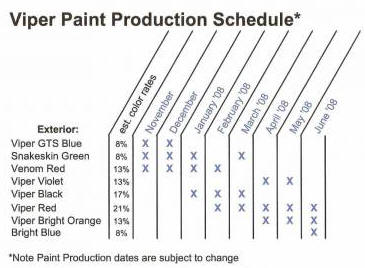
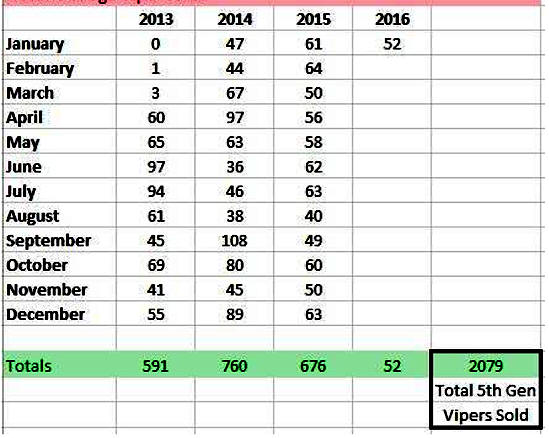
As per Dodge, they built 1,584 Vipers in 2005 (300 were Copperheads)
Production Information: By Model Year
| Year | Total Units | U.S. Units | Canadian Units | Foreign Units | First VIN | Last VIN |
| '92 | 285 | 236 | 14 | 35 | NV100001 | NV100285 |
| '93 | 1043 | 938 | 39 | 66 | PV200001 | PV201055 |
| '94 | 3083 | 2394 | 246 | 443 | RV100001 | RV103087 |
| '95 | 1577 | 1422 | 114 | 41 | SV200001 | SV201584 |
| '96 | 721 | 686 | 30 | 5 | TV100001 | TV10780 |
| '96 GTS | 1166 | |||||
| '97 RT/10 | 117 | 302580 | ||||
| '97 GTS | 1671 | |||||
| '98 RT/10 | 379 | 341 | 38 | 0 | WV400050 | WV401277 |
| '98 GTS | 837 | 731 | 32 | 74 | WV100013 | WV401666 |
| '99 RT/10 | 549 | 498 | 51 | 0 | XV5024454 | XV503935 |
| '99 GTS | 699 | 549 | 72 | 78 | XV5024423 | XV5039462 |
| '99 ACR | 215 | XV503922 | ||||
| '00 RT/10 | 840 | 757 | 83 | 0 | ZV6061292 | |
| '00 GTS/ACR | 949 | 804 | 92 | 53 | ||
| '00 ACR | 218 | ZV6026911 | ZV606564 | |||
| '01 RT/10 | 874 | 825 | 49 | 0 | V7048802 | |
| '01 GTS/ACR | 877 | 827 | 50 | 0 | ||
| '01 ACR | 227 | V7006811 | V704694 | |||
| '02 RT/10 | 545 | 508 | 37 | 2V102627 | ||
| '02 GTS/ACR | 918 | 873 | 45 | 2V100832 | 2V102736 | |
| '02 ACR | 159 | 2V100832 | 2V102887 | |||
| '03 SRT-10 Convertible | 1875 | 1739 | 130 | 6 | 3V500082 | 3V501777 |
| '04 SRT-10 Convertible | 2433 | |||||
| '05 SRT-10 Convertible | 2003 | |||||
| '05 SRT-10 Coupe | 6 | |||||
| '06 SRT-10 Convertible | 752 | 572 | 10 | 170 | ||
| '06 SRT-10 Coupe | 1117 | 1071 | 39 | 7 | ||
| '08 SRT-10 Convertible and Coupe | 1,579** | 8V200049 8V200050 | ||||
| 09 SRT-10 Convertible and Coupe | 482 | |||||
| 10 SRT-10 Convertible and '10 SRT-10 Coupe | 392 | |||||
| 2013 SRT Viper | 805 | 640 HP | ||||
| 2014 SRT Viper | 989 est | |||||
| 2015 SRT Viper | 850 est | 645 HP | ||||
| 2016 SRT Viper | 1,200 est | 750 HP super charged, convertible due to be offered |
** Includes cars built in CY 2007 production.
- First retail
- Last retail
- 12/11/98
- 1/4/99
Notes:
Total 1997 Viper build: 1788 (1762 retail, 26 Pilots), Last ’97 off the line was VIN #302580 (others had higher VIN’s, but this was the last unit off the line).
’98 numbers include 12 pilot and pre-production units (6 roadsters and 6 coupes) which will not be sold.
’99 Viper VINS will be confusing to some, as they are shared with Prowler, and CAPP had already built about 2300 ’99 Prowlers (The same situation occurred in ’97, but not in ’98, as there was no ’98 Prowler); Therefor, ’96 and ’98 Vipers have exclusive VIN sequences, ’97 and ’99 are shared with the Prowler.
’01: No Export (BUX) sales. Total Monotone: 1392, Total Stripes: 359.
’05: Coupe: No Export (BUX) Coupe and 7 Mexico units. Convertible: 162 Export (BUX) and 8 Mexico units.
| 2008 M/Y Production | Roadster Total (ARY) |
Coupe Total Total (ARY) (ARC) |
Grand Total |
| Venom Red | 213 (4) | 178 (1) (7) | 391 |
| Viper Black | 142 (13) | 208 (13) (58) | 350 |
| Snake skin Green | 112 (2) | 132 (2) (0) | 244 |
| Viper Red | 93 (2) | 129 (4) (74) | 222 |
| Viper Very Orange | 65 (5) | 85 (3) (24) | 150 |
| GTS Blue | 45 (0) | 74 (0) (0) | 119 |
| Bright Blue | 30 (4) | 34 (2) (7) | 64 |
| Viper Violet | 11 (1) | 27 (1) (9) | 38 |
| Silver (Special) | 1 (0) | 0 | 1 |
| TOTALS | 712 (31) | 867 (26) (179) | 1579 |
Dodge Viper RT-10 Roadster Exterior and Interior Color Production Information
| Exterior | Interior | Wheels | ||||||||||||||||
| Year | B l a c k |
R e d |
G r e e n |
Y e l l o w |
W h i t e |
B l u e |
S i l v e r |
S t e e l G r a y |
G r a p h i t e M e t a l l i c |
B l a c k |
C o g n a c |
G r a y |
P o l i s h e d |
G o l d |
P a i n t e d |
Y e l l o w |
G T - 2 |
W h i t e |
| 1992 | 11 | 285 | 11 | 11 | 11 | 285 | 285 | |||||||||||
| 1993 | 1152 | 9282 | ||||||||||||||||
| 1994 | 6872 | 21892 | 1332 | 832 | ||||||||||||||
| 1995 | 514 | 458 | 307 | 298 | 572 | 1005 | ||||||||||||
| 1996 | 2312 | 1662 | 3242 | 716 | 2 | 3 | ||||||||||||
| 1997 | 64 | 53 | 114 | 3 | 114 | 3 | ||||||||||||
| 1998 | 252 | 127 | 379 | |||||||||||||||
| 1999 | ||||||||||||||||||
| 2000 | 259 | 255 | 296 | 306 | 534 | 840 | ||||||||||||
| 2001 | 256 | 356 | 252 | 1 | 656 | 218 | 873 | 1 | ||||||||||
| 2002 | 181 | 178 | 186 | 459 | 86 | 545 | ||||||||||||
- Exterior color changed (from red), interior changed (from gray) by factory as development/trial.
- Estimated
Notes:
’97: Three red ’97 RT/10’s were ordered with the “Gold Package” (gold sparkle wheels, and a gold snake emblems on the hood’s sides) and a tan interior.
This is the lowest factory shipped color combination to date. One solid blue RT/10 (no white stripes) with black steering wheel, shift knob, e-brake manufactured.
’98: Last car off the line was a red roadster on 12/11/98. One ’98 RT/10 (VIN 1B3ER65E*WV400408) was accidentally shipped with a “smooth hood and
pre-’98 RT/10″ facia. All other ’98 RT/10’s were manufactured with NACA duct and vented hood and GTS style front facia.
’99: 169 Roadsters with Cognac Connolly Leather interior: 3 Red, 50 Silver, 116 Black.
’00: All RT/10’s were built with five-spoke polished wheels.
’01: One Steel Gray ACR RT/10 with tan interior and black powder coated ACR-BBS Wheels, VIN 1B3ER69E*2V102035, Viper Club of America raffle car
ACR Coupe Exterior and Interior Color Production Information
| Exterior | Interior | Wheels | |||||||||
| Year | B l u e |
R e d |
S i l v e r |
S t e e l G r a y |
B l a c k |
Y e l l o w |
S a p p h i r e B l u e |
G r a p h i t e M e t a l l i c |
B l a c k |
C o g n a c |
BBS |
| 1999 | 36 | 81 | 98 | 215 | |||||||
| 2000 | 60 | 85 | 73 | 218 | 218 | ||||||
| 2001 | 60 | 89 | 77 | 227 | 227 | ||||||
| 2002 | 1 | 79 | 40 | 39 | 159 | 159 | |||||
Notes:
’99: Only 9 ACR’s were built without A/C and Stereo Comfort Group.
’00: Only 17 ACR’s were built without A/C and Stereo Comfort Group.
’01: Only 4 ACR’s were built without A/C and Stereo Comfort Group.
’02: Only 8 ACR’s were built without A/C and Stereo Comfort Group. One special Blue/Silver ACR built for Viper Club of America raffle. There were 34 Final Edition GTS ACR’s built
with an exclusive red/white paint scheme and red stitching on the interior.
SRT-10 Roadster Exterior and Interior Color Production Information
| Exterior | Interior | Wheels | |||||||||
| Year | B l u e |
R e d |
S i l v e r |
S t e e l G r a y |
B l a c k |
Y e l l o w |
S a p p h i r e B l u e |
G r a p h i t e M e t a l l i c |
B l a c k |
C o g n a c |
BBS |
| 1999 | 36 | 81 | 98 | 215 | |||||||
| 2000 | 60 | 85 | 73 | 218 | 218 | ||||||
| 2001 | 60 | 89 | 77 | 227 | 227 | ||||||
| 2002 | 1 | 79 | 40 | 39 | 159 | 159 | |||||
Notes:
’03: 5 pilot units built as Bright Silver (PSB sales code) and 5 pilot units built as Graphite (PDR sales code). 2003 VCA Raffle SRT-10 manufactured as red and was custom painted with VOI.7 Nashville “Guitar Theme”
SRT-10 Coupe Exterior and Interior Color Production Information
| Exterior | Interior | Wheels | ||||||||||
| Order Codes | PRN | PX3 | PVR | PW1 | PYR | PAP | PBE | WPH-10 | WP6-5 | WP7-H | ||
| Year | V i p e r R e d |
V i p e r B l a c k |
C o p p e r h e a d O r a n g e S a t i n |
S t o n e W h i t e |
R a c e Y e l l o w |
V i p e r S l a t e C r y s t a l |
V i p e r G T S B l u e |
B l a c k |
P o l i s h e d |
T e n S p o k e |
F i v e S p o k e |
H - S p o k e |
| '05 | 6 | |||||||||||
| '06 | 206 | 233 | 51 | 100 | 72 | 31 | 424 | |||||
| '08 | ||||||||||||
Notes:
’05: 6 development units
’06: 100 Stone White VCA Editions: 9 delivered with Mopar Performance Option (installed by Prefix), 13 Vegas drive-away (designated by VOI logo on A-pillar).
| M.Y. Year | Model | Production number |
|---|---|---|
| 1992 | RT/10 | 285 |
| 1993 | RT/10 | 1043 |
| 1994 | RT/10 | 3083 |
| 1995 | RT/10 | 1577 |
| 1996 | RT/10 | 721 |
| 1996 | GTS | 1166 |
| 1997 | RT/10 | 117 |
| 1997 | GTS | 1671 |
| 1998 | RT/10 | 379 |
| 1998 | GTS | 837 |
| 1998 | GT2 Championship Edition | 100 |
| 1999 | RT/10 | 549 |
| 1999 | GTS | 484 |
| 1999 | ACR | 215 |
| 2000 | RT/10 | 840 |
| 2000 | GTS | 731 |
| 2000 | ACR | 218 |
| 2001 | RT/10 | 874 |
| 2001 | GTS | 650 |
| 2001 | ACR | 227 |
| 2002 | RT/10 | 545 |
| 2002 | GTS | 759 |
| 2002 | ACR | 159 |
| 2003 | SRT-10 Convertible | 1875 |
| 2004 | SRT-10 Convertible | 2435 |
| 2005 | SRT-10 Convertible | 2010 |
| 2005 | SRT-10 Coupe | zero |
| 2006 | SRT-10 Convertible | 752 |
| 2006 | SRT-10 Coupe | 1117 |
| 2007 | ---- | No 2007 Model Year Vipers |
| 2008 | SRT-10 Convertible | 712 |
| 2008 | SRT-10 Coupe | 688 |
| 2008 | ACR | 179 |
| 2009 | SRT-10 Convertible | 167 |
| 2009 | SRT-10 Coupe | 241 |
| 2009 | ACR | 245 |
| 2010 | SRT-10 Convertible | 0 |
| 2010 | SRT-10 Coupe | 326 |
| 2010 | ACR | 34 |
| 2011 | ---- | No 2011 model year Vipers. |
| 2012 | ---- | No 2012 model year Vipers |
| 2013 | All models | 925 estimated by TVS |
| 2014 | All models | 1950 estimated by TVS |
| 2015 | All models | 690 estimated by TVS |
| 2016 | All models | 575 estimated by TVS |
| 2017 | All models | 500 estimated by TVS |

Compare Viper Production to Corvette Production....
| Production of Chevy Corvette | ||||||
| Model | Years Produced | Coupes | Convertibles | Fixed Roof Coupes | Total | |
| C1 | 1953 - 1962: | 10 | 0 | 69,015 | 0 | 69,015 |
| C2 | 1963 - 1967: | 5 | 45,546 | 72,418 | 0 | 117,964 |
| C3 | 1968 - 1982: | 15 | 472,275 | 70,586 | 0 | 542,861 |
| C4 | 1984 - 1996: | 13 | 283,529 | 74,651 | 0 | 358,180 |
| C5 | 1997 - 2003: | 7 | 108,431 | 77,394 | 28,826 | 214,651 |
| Totals: | 909,781 | 364,064 | 28,826 | 1,302,401 | ||
Versions of Aero Body Performance Package for the Viper Gen 5